About Lacey Park
I was one of those little girls who made potions in the backyard. Leaves, flowers, berries, water, dirt—whatever I could find went into jars and became some kind of medicine. I was also fascinated by the fact that if one of my friends had an ache or pain, sometimes I could hold my hands over it and they would tell me it felt better. I didn’t have much of a framework for any of this. I just knew, very early, that I wanted to help people heal.
That thread has followed me through most of my life. I became a mother as a teenager, and have four living children. Raising them shaped nearly every decision I made for a long time. We eventually built an off-grid home in rural New Brunswick, homeschooled, grew food, heated with wood, and created a life that gave me plenty of opportunities to question what we actually need to be healthy.
Somewhere along the way, the backyard potions became a little more sophisticated. I fell in love with foraging and learning the plants growing around me—what they were, how people had used them, which ones belonged in food or medicine, and which ones were better left alone. I loved the satisfaction of recognizing something along a trail that I once would have walked past without noticing. Apparently I never stopped making potions. I just eventually learned what to put in them.
My path into healthcare was never particularly conventional. I studied Reiki and eventually became a Reiki Master. I worked as a birth and postpartum doula and later built a doula agency. I became a placenta encapsulation specialist, which remains one of the more unusual entries on my résumé and, unexpectedly, became an important part of how I found Chinese medicine.
Placenta work absolutely lit me up. I loved supporting people during that strange, intense stretch of time after birth, but I also wanted to understand the traditions behind what I was doing. That curiosity eventually introduced me to Zi He Che—human placenta in the Chinese materia medica—and suddenly I had about a thousand more things I wanted to know. I started reading about Chinese medicine, postpartum traditions, herbs, and the different ways people have understood the body across cultures and throughout history. The rabbit hole had officially opened.
For years, I had considered healthcare without being able to see myself inside the conventional paths available to me. Nursing and medicine never felt quite right. My own beliefs about health, illness, bodily autonomy, and the role of the practitioner didn’t fit comfortably within those systems. I also had children to raise, and going back to school for years simply wasn’t possible during much of that season of my life.
So I kept learning in other ways. I worked. I raised my kids. I drove transport truck and helped run a trucking business. I built websites and learned marketing, eventually working with wellness professionals—including a few acupuncturists. I became an acupuncture patient myself. And Chinese medicine kept showing up.
Eventually, the timing changed. My children were older, and the possibility that had once seemed completely impractical suddenly wasn’t. So I went back to school to study acupuncture and Traditional Chinese Medicine, and this time there was no wondering whether I had chosen the right thing.
I love this work. I love clinic. I love treating people. I love the moment when something I have been studying on paper suddenly makes sense because I see it in an actual human being. I love learning a technique from a practitioner who has used it thousands of times, and I love discovering that something I thought I understood is considerably more complicated than I realized.
Maybe unsurprisingly, I also loved herbology. Studying Chinese materia medica felt strangely familiar. After years of foraging and learning the plants around me, I was suddenly studying an entire medical tradition built around the careful observation and use of plants, roots, bark, seeds, minerals, and other substances. The plants were different, the framework was different, and the depth was enormous, but the curiosity was the same. What is this? What does it do? Why does it work this way? How have people actually used it? I could happily spend an unreasonable amount of time following those questions.
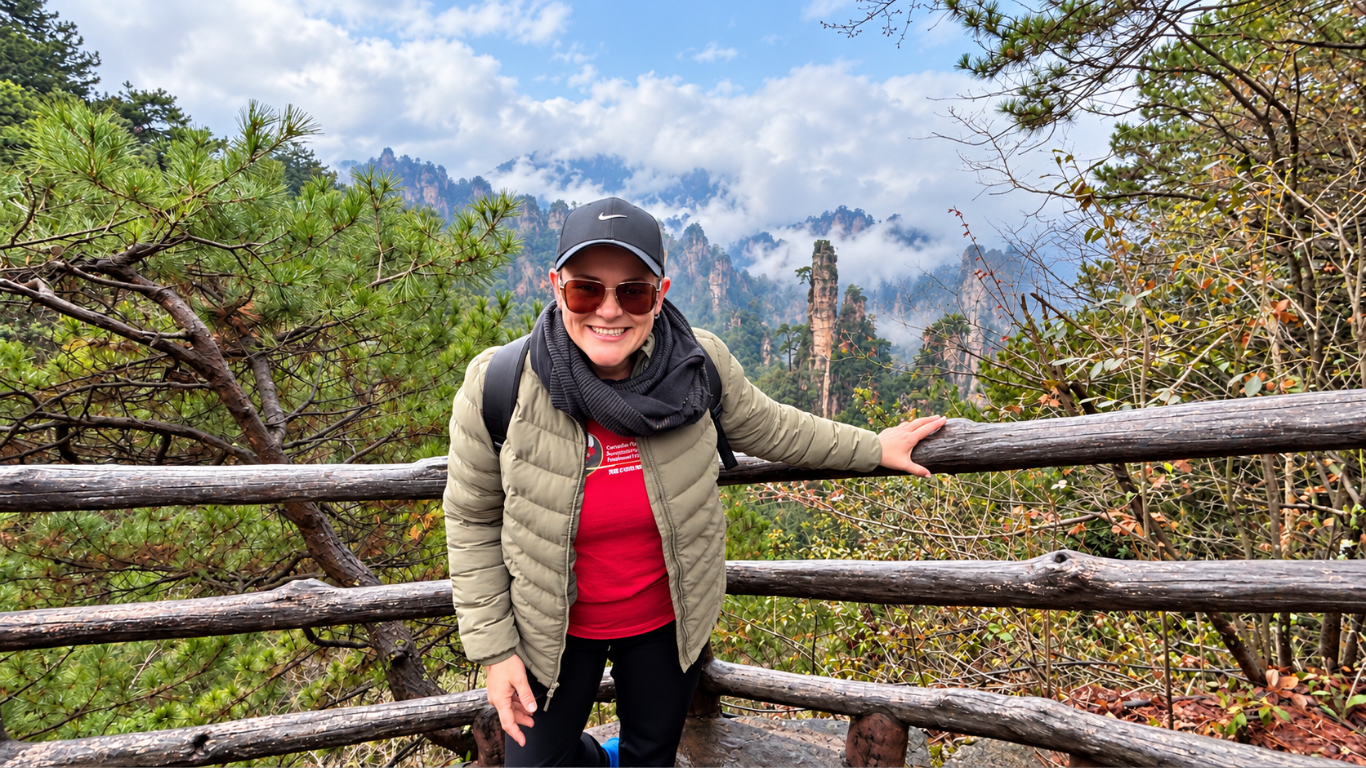
The deeper I get into Chinese medicine, the more interesting it becomes. Studying in China only made that stronger. Seeing Chinese medicine practised in hospitals and clinics reminded me that this is not a frozen collection of ancient ideas. It is a living medicine, practised by real people, on real bodies, in a modern world.
I’m interested in the classics and the history, but I’m especially interested in what happens when all of that knowledge meets actual clinical practice. I want to know what experienced practitioners notice, what patients experience, what changes, what doesn’t, what holds up, and what deserves another look. I expect to spend the rest of my life asking those questions.
Now I’m building my practice back home in rural New Brunswick, in the same communities where I have raised my family and built my life. Providing acupuncture here feels important to me. Rural healthcare can be difficult to access, and I want my practice to be useful: somewhere people can come regularly, ask questions, learn about their bodies, and receive thoughtful care.
I also happen to love the luxurious side of this medicine. Facial acupuncture, gua sha, beautiful herbs, and long treatments absolutely have a place in my world. But underneath all of it is the same little girl making potions in the backyard. She just knows a lot more plants now.
I still want to know what helps and understand why. And when I learn something fascinating, my first instinct is still to run and tell somebody about it.
That’s what this website is for. It’s part clinic, part notebook, part ongoing experiment, and part record of what I hope will be a very long life spent studying Traditional Chinese Medicine. I don’t want to position myself as someone who has Chinese medicine all figured out. I’d much rather invite you to nerd out with me while I keep figuring it out.
 For the TCM Nerds.
If you’ve ever stayed up far too late reading about an acupuncture point, stopped a lecture to scribble down a question, taken a photo of a plant because it reminded you of a herb, or walked out of clinic thinking, “I need to talk to someone about what I just saw,” you’ll probably feel at home here.
Every so often I send a letter with the things that didn’t fit on Instagram. The clinic moments that changed how I think, interesting research papers, stories from China, books I’m reading, questions I can’t stop chasing, mistakes that taught me something, and the rabbit holes that make Traditional Chinese Medicine endlessly fascinating.
If that sounds like your kind of email, I’d love to have you along.