My TCM origin story did not start with needles. It started with placentas.
Long before acupuncture school, I was working as a birth and postpartum doula. I was already deep in the world of birth stories, breastfeeding struggles, herbal teas, sitz baths, freezer meals, mesh underwear, cracked nipples, healing perineums, and all the quiet postpartum wisdom women pass to each other when the official system has mostly left the picture.
Placenta encapsulation was one of those things floating around the “natural” birth world. At first, I was skeptical. Very skeptical. Because let’s be honest: “dehydrated human organ that came out of a vagina capsules” sounds less like medicine and more like the beginning of a documentary where everyone involved should have asked more questions.
But then one of my close friends became pregnant with her fourth baby, and she really wanted her placenta encapsulated.
Not casually. Not in a “maybe this would be cute for my birth plan” kind of way.
After her first and second babies, she had experienced intense postpartum depression. The kind where nothing seemed to help and recovery felt impossible to get a grip on. Then, with her third baby, she had her placenta encapsulated, and her postpartum experience was completely different. She felt better. More stable. More like herself.
So when baby number four came along, she was not interested in taking chances with her recovery.
The problem was that the woman who had prepared her placenta last time had moved away.
So when she asked me to learn, it was not because placenta encapsulation sounded trendy or crunchy or interesting. It was because, in her lived experience, it had mattered.
She wanted it badly enough that she practically begged me to learn how to do it for her.
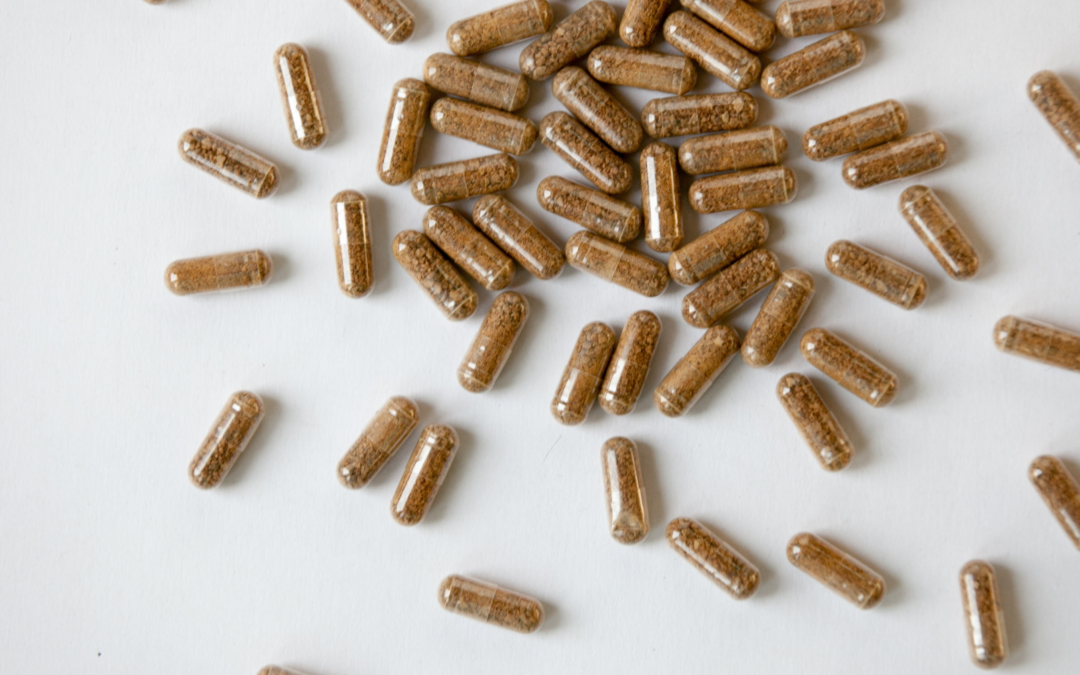
So I did. I took a workshop. I learned a TCM-inspired preparation method that involved gently steaming the placenta with fresh ginger and lemon before dehydrating and encapsulating it. I made her capsules, a tincture, and even a salve. And somewhere inside that strange, earthy, birth-worker rabbit hole, I learned about Zi He Che.
That was probably the first time I became genuinely fascinated by Chinese medicine. Not acupuncture, needles, or meridians yet. Materia medica. The idea that a substance could have a temperature, a flavour, a direction, an organ affinity, basically a personality. The idea that medicine was not only about “what is this made of?” but also “what does this do inside the body?” The idea that postpartum women were not simply “hormonal,” “emotional,” or “tired,” but profoundly changed and depleted in ways western medicine has barely scratched the surface on. Before I could find SP6 without second guessing myself, before I understood Liver Qi stagnation, before I knew how to read a tongue, I was already drawn to the worldview underneath Chinese medicine.
Recovery matters. Depletion matters. Digestion matters. Warmth matters. Blood matters. And postpartum women deserve serious care after birth, not just a mesh diaper, a freezer pad, and vague advice to “listen to your body.”
What Is Zi He Che?
In Chinese medicine, human placenta is known as Zi He Che. And no, it is not the sort of thing you casually toss into a morning supplement stack beside vitamin D and magnesium.
Classically, Zi He Che is considered a powerful tonic substance. It is traditionally understood to nourish Qi, Blood, Essence/Jing, Kidney deficiency, and the Lung and Kidney systems. That is deep medicine.
In traditional use, it was not treated like a trendy postpartum add on. It was used for serious deficiency patterns: profound weakness, chronic depletion, infertility, wasting conditions, developmental weakness, insufficient lactation, exhaustion after illness, and depletion of Kidney Essence.
So yes, there is a real Chinese medicine conversation here. A much more interesting conversation than “placenta pills: gross or magical?” But it is also more nuanced than “every postpartum person should take placenta capsules,” because postpartum is not a diagnosis in Chinese medicine. Postpartum is the room we walk into before we start asking better questions.
The Postpartum Body Through a TCM Lens
In Chinese medicine, birth is understood as a major expenditure of Qi, Blood, fluids, and Essence. And honestly, you do not need to be a scholar of classical medicine to see why.
A person grows an entire baby from their own body, gives birth, bleeds, sweats, leaks, heals, feeds another human, sleeps in broken pieces, and then somehow has to remember which breast the baby last nursed on while someone asks if they have thought about returning to exercise. Of course the body is depleted. Of course recovery matters.
But here is where Chinese medicine gets more interesting than the usual postpartum wellness conversation: depletion is not the only thing that can happen after birth. Common postpartum patterns in TCM may include Blood deficiency, Qi deficiency, Spleen deficiency, Kidney depletion, Blood stasis, vulnerability to Wind and Cold, and Shen disturbance.
Blood deficiency can show up as pallor, dizziness, fatigue, dry skin, hair loss, blurry vision, insomnia, emotional fragility, or feeling easily overwhelmed. Qi deficiency may look like exhaustion, weakness, spontaneous sweating, shortness of breath, poor appetite, slow recovery, or the feeling that the body just cannot get it together.
Spleen deficiency is especially important postpartum because the Spleen is central to digestion, transformation, and the production of postnatal Qi and Blood. If digestion is weak, throwing rich tonics at the body may not help. The body has to be able to transform them.
Kidney depletion or Essence deficiency is the deeper constitutional layer. Pregnancy, birth, breastfeeding, sleep deprivation, and recovery all draw from deep reserves. When those reserves are already low, postpartum can hit hard.
Blood stasis matters too. Birth involves movement of Blood. Lochia needs to discharge. The uterus needs to recover. Pain, clots, fixed abdominal discomfort, or retained lochia may point toward stasis that needs to move before heavy tonification makes sense.
And then there is Shen disturbance. This is where the conversation gets especially important for doulas, birth workers, and anyone interested in postpartum mood disorders. In TCM, the Heart houses the Shen, often translated as the mind, spirit, consciousness, or emotional presence. The Shen needs enough Blood and Yin to feel settled.
When Blood is depleted, the Shen may become unanchored. That can look like anxiety, weepiness, insomnia, panic, emotional sensitivity, racing thoughts, or feeling exhausted and wired at the same time. So when we talk about postpartum mood through a Chinese medicine lens, we are not only talking about emotions. We are asking whether the body has enough substance to hold the mind steady.
That is one reason Zi He Che makes theoretical sense for some postpartum people. If the underlying pattern is deep depletion (Qi deficiency, Blood deficiency, Kidney deficiency, Essence depletion) then a powerful restorative substance may help rebuild the foundation underneath emotional stability.
But that does not make it universal. A person can be postpartum and still have Heat. They can be postpartum and still have Dampness. They can be postpartum and still have Blood stasis. They can be postpartum and have Liver Qi constraint. They can be postpartum and have digestion so weak that rich tonics make everything worse.
Chinese medicine is always asking what is actually happening in this body. Not what is trending, not what worked for someone’s friend, not what a birth forum said. This body. This pattern. This moment.
Why Zi He Che Is Connected to Postpartum Mood
One of the reasons placenta encapsulation became meaningful to me in the first place was postpartum mood. My friend was not asking me to learn because she was casually curious about placenta capsules. She was asking because, after struggling with postpartum depression after earlier births, she had a much better postpartum experience the time she used placenta capsules.
Of course, that does not prove the capsules were the only reason things were different. Postpartum recovery is complicated. Support, sleep, feeding, birth experience, stress, hormones, nutrition, and timing all matter. But in her lived experience, that postpartum felt different enough that when baby number four came along, she was not willing to leave it off the table.
After studying Chinese medicine, I understand that story differently. Zi He Che is not “a postpartum depression herb,” because that is not how Chinese medicine thinks. But it is aligned with some of the deeper depletion patterns that can sit underneath postpartum mood struggles: Qi deficiency, Blood deficiency, Essence depletion, weak recovery, and Shen disturbance. In TCM, the Heart houses the Shen, and the Shen needs enough Blood and Yin to feel anchored.
So if someone is pale, depleted, weak, dry, dizzy, exhausted, emotionally fragile, slow to recover, and unable to feel grounded in their body, I can see why Zi He Che may be theoretically aligned. But if someone is wired-but-tired, restless, hot at night, agitated, headachy, irritable, unable to sleep, or showing signs of empty Heat, a warming, deeply tonifying substance may be too much. The better question is not “does placenta help postpartum depression?” It is: what kind of postpartum mood picture is this, and what does this person actually need?
Why Zi He Che Is Connected to Milk Supply
Another common claim about placenta pills in the western birth world is that it may support milk supply. After studying Chinese medicine, I understand why that idea exists, but I also understand it differently now.
Zi He Che is not really a “milk supply herb” in the simple modern sense. It is a deep tonic. In classical materia medica, it is associated with profound depletion: Qi and Blood deficiency, women’s exhaustion, chronic weakness, Essence deficiency, infertility, and states where the body has been deeply taxed. That matters because, in Chinese medicine, low milk supply can sometimes be part of that same depletion picture.
There is an old TCM understanding that breast milk is transformed from Blood. That does not mean milk is literally Blood in a biomedical sense. It means lactation depends on the same deep resources: Blood, fluids, digestion, postnatal Qi, and the body’s ability to transform nourishment into something useful.
So if someone is pale, exhausted, weak, dizzy, dry, depleted, emotionally fragile, slow to recover, and struggling with milk supply, I can see why Zi He Che would be considered theoretically aligned. Not because placenta magically “makes milk,” but because it nourishes the deeper substances the body may need in order to make milk.
But low supply is not always deficiency. It can also involve stagnation, constraint, poor flow, latch issues, retained placenta, hormonal factors, structural history, or damage from breast surgery, implants, reductions, nipple procedures, scar tissue, or trauma. Very rarely, there may also be a developmental issue where the milk-producing tissue itself is limited. That is a different conversation from deep depletion.
Some people have also heard, “My mother had low supply, so I probably will too.” Maybe. There can be constitutional factors, and in TCM we might think about Jing or inherited reserves. But family patterns are not always fixed destiny. Families also pass down food habits, stress patterns, rest patterns, beliefs about recovery, and ways of pushing through depletion. So when low supply “runs in the family,” I would still want to ask: is this truly structural, or are we looking at a repeated pattern of Qi deficiency, Blood deficiency, Spleen weakness, Liver constraint, or never getting enough postpartum care?
This is where modern placenta culture sometimes flattens the whole conversation. The question is not simply, “Does placenta increase milk?” The better TCM question is, why is milk low in this person?
Is there enough Blood to make milk? Enough Qi to transform and move it? Enough Kidney reserve underneath the process? Is the Spleen strong enough to build? Is the Liver allowing flow? Is there stasis, constraint, Dampness, Heat, fear, pain, exhaustion, structural history, retained placenta, or latch difficulty complicating the picture?
Because if you do not know the mechanism, you do not really know what you are treating. And if you don’t know what you are treating, how can you choose the correct medicine?
Why the Steaming, Ginger, and Lemon Preparation Makes Sense
The method I learned involved gently steaming the placenta with fresh ginger and lemon before dehydrating and encapsulating it. At the time, I thought that was mostly about smell, cleanliness, and tradition. Now, with more Chinese medicine education behind me, I see the logic very differently.
The steaming itself matters. In Chinese medicine, preparation changes a substance. We see this all through materia medica: herbs are dry-fried, honey-fried, wine-fried, vinegar-processed, charred, steamed, or cooked with other substances because the method changes how the medicine behaves in the body. Processing can moderate harshness, change direction, reduce toxicity, support digestion, enhance a function, or make a substance more suitable for the person using it.
So when I look back at the placenta preparation method now, I do not see steaming as a random step. I see it as part of making a dense, rich, deeply animal substance more cooked, more digestible, and more appropriate for a depleted postpartum body. Raw and cooked are not the same thing in Chinese medicine. Preparation matters.
Fresh ginger makes sense too. It is warm, dispersing, and harmonizing. It supports the middle burner, warms digestion, transforms Dampness, and helps the body handle rich substances. And placenta is rich. Very rich.
Energetically, Zi He Che is dense, heavy, deeply tonifying, and potentially cloying. In Chinese medicine, “cloying” means a substance is so rich and nourishing that weak digestion may struggle to transform it. Instead of becoming useful Qi and Blood, it can create heaviness, bloating, nausea, fogginess, Dampness, phlegm, or headaches.
This is such an important concept for TCM students. A tonic is only useful if the body can digest, transform, and distribute it. Otherwise, congratulations, you have created expensive Dampness.
So the ginger is not just there to make the whole thing smell less like liver without the onions. It helps the body receive the medicine. Lemon is interesting too. Sour flavours gather and astringe, while citrus also has a moving, aromatic quality. In Chinese herbal thinking, aromatic and Qi-moving substances are often used to keep rich tonics from becoming too stagnant.
So is the modern TCM-inspired placenta method exactly the same as classical Zi He Che processing? No. But does the logic make sense? Actually, yes. It reflects a very Chinese medicine idea: when something is dense and tonic, the way you prepare it matters. You may cook it, warm it, pair it with something moving, or support the middle burner so the body can actually use it.
That is one of the reasons Chinese herbal medicine is so brilliant. It is rarely just “take the strongest herb.” It is architecture. One substance nourishes. One moves. One protects digestion. One guides. One moderates. The whole formula has a job.
Why Placenta Capsules Can Backfire
Here is where I have become more cautious. The most common side effects I heard about when I was in the placenta encapsulation world were headaches and that anxious, wired-but-tired feeling.
At the time, I did not fully understand why. Now I look at those reactions very differently.
If the Spleen is weak, a rich tonic may be too much. The body may not transform it well, leading to Dampness or turbidity rising upward. That can feel like heaviness, fogginess, nausea, pressure, or headache.
If someone already has Heat, Yin deficiency, Liver Yang rising, or strong agitation, Zi He Che may be too warming or too tonifying. That could aggravate headaches, irritability, flushing, restlessness, insomnia, or anxiety.
That wired-but-tired feeling is especially interesting through a TCM lens. To me now, that sounds like the medicine may have been wrong for the person’s pattern. If someone is already Yin deficient, especially with deficiency Heat, a warming Essence tonic may push the system in the wrong direction.
Instead of feeling nourished, they may feel overstimulated. Exhausted but unable to sleep. Tired but restless. Depleted but buzzy. Hot at night. Irritable. Emotionally thin-skinned. Unable to settle.
That is not the same as cold, empty depletion. That is empty Heat territory. And empty Heat does not need to be pushed harder with warm tonics. It needs a gentler, more Yin-nourishing, cooling, anchoring strategy.
This is why pattern differentiation matters. The same substance that makes sense for one postpartum person may be completely wrong for another.
The Timing Matters Too
Immediately postpartum, the body is still clearing. Lochia needs to move. Blood stasis needs to resolve. Fluids need to regulate. The uterus is doing its work.
In classical Chinese medicine thinking, you do not want to tonify so aggressively that you trap what still needs to leave. This is one of the most important postpartum principles: first move what must move, then rebuild what has been lost.
That is very different from “take the capsules right away because postpartum equals depleted.” Yes, postpartum often involves deficiency, but there may also be stasis. There may be Heat. There may be infection. There may be retained lochia. There may be digestive collapse. There may be emotional distress rooted in something other than deficiency.
The timing of a medicine matters. The dose matters. The person matters. The pattern matters. Chinese medicine is annoying like that, which is also why I love it. It refuses to let us be lazy.
Placenta Is Not the Only Postpartum Medicine
One thing I wish more people understood is that Chinese medicine has an entire postpartum framework. Placenta is only one part of a much larger conversation.
There are other herbs and foods traditionally used to support postpartum recovery, and many of them are far less intense than “please consume your own organ.”
Dang Gui is one of the classic Blood herbs. It is important because it both nourishes and moves Blood, which is useful postpartum because the body may be depleted while still needing to resolve stasis.
Huang Qi is a major Qi tonic, often thought of when someone is weak, sweating easily, slow to recover, or deeply fatigued.
Bai Shao nourishes Blood and softens the Liver, which may be useful when depletion comes with tension, cramping, irritability, or emotional sensitivity.
Shu Di Huang deeply nourishes Blood, Yin, and Essence, though it is also rich and cloying, so it needs respect and proper formulation.
Tong Cao and Wang Bu Liu Xing often appear in lactation conversations, especially when milk production or flow is an issue.
But this is where I have to say the responsible thing: herbs are medicine. They are not just “natural things.” They should be chosen based on pattern, constitution, timing, and presentation, ideally with guidance from a qualified practitioner. Especially postpartum. Especially while breastfeeding. Especially when there are mood symptoms, infection concerns, heavy bleeding, retained lochia, severe fatigue, or complex medical history.
Food, Rest, and Support Are the Real Postpartum Foundation
As much as I love the strange and brilliant corners of materia medica, the real foundation of postpartum care is usually much less exotic.
Food. Rest. Warmth. Support.
This is where Chinese medicine makes me side eye modern Western postpartum culture so hard. Somehow we decided a recovering postpartum body should be fed cold smoothies, raw salads, protein bars, iced coffee, and “bounce back” expectations while caring for a newborn on broken sleep.
No. Absolutely not.
In Chinese culture, postpartum recovery has traditionally been treated as a protected period. The practice is often called zuo yue zi, or “sitting the month.” Every family does it differently, especially in modern life, but the basic idea is that the mother is not supposed to launch herself immediately back into normal life. She is supposed to be fed, warmed, protected, and cared for while her body rebuilds.
When I was preparing placenta capsules, many of the mothers of Chinese descent I worked with were doing some modified version of confinement. Their mothers, mothers-in-law, aunties, or other family members were there cooking, helping with the baby, managing the house, and making sure the new mother was not left alone to perform recovery like another productivity project.
That stayed with me.
Because in a lot of Western postpartum culture, we talk about “support” like it means sending a heart emoji or dropping off a lasagna once. But in the homes where I saw real postpartum support, it looked much more practical. Someone was making soup. Someone was holding the baby so the mother could sleep. Someone was keeping the kitchen moving. Someone was watching the mother closely enough to notice if she looked pale, chilled, overwhelmed, or not quite right.
And honestly, even when I was “just” there to prepare capsules, I could feel how impactful small, practical support could be. I might help someone get a better latch, look at a clot that had them nervous, reassure them when something was normal, suggest when something needed more attention, wipe down the kitchen, toss in a load of laundry, or quietly bring the room back into order while their body was doing the enormous work of recovering.
That care is medicine.
The soup is medicine. The nap is medicine. The warm bowl of congee someone else made is medicine. The clean kitchen is medicine. The auntie at the stove is medicine. The fact that nobody expects the mother to host visitors, clean the bathroom, make dinner, or prove she is “back to herself” is medicine.
From a Chinese medicine perspective, postpartum food should be warm, cooked, digestible, and rebuilding. Think soups, broths, congee, ginger, eggs, slow-cooked meats, red dates, black sesame, goji berries, rice, stews, and cooked vegetables. Foods that are easy for the Spleen to transform into Qi and Blood.
The point is not just “eat healthy.”
The point is whether the body can actually receive the food, digest it, transform it, and use it to rebuild.
The postpartum body is not a wellness challenge. It is a reconstruction site. And in Chinese medicine, you do not rebuild with cold, raw, hard-to-digest foods while the body is recovering from one of the most Blood-and-Qi-consuming events of a person’s life.
Warm food is not just cozy. It is strategy.
Rest is not laziness. It is treatment.
Support is not a luxury. It is part of the medicine.
What TCM Students Can Take From This
For TCM students, I think one of the biggest takeaways is this: just because a use is modern, Western, or filtered through the birth world does not automatically mean it is invalid.
Placenta encapsulation, as it is commonly practiced in North America, is not exactly the same thing as classical Zi He Che use. The preparation may be different. The context is different. The language around it is definitely different. Modern birth culture can flatten it into “placenta pills help mood and milk supply,” which is not exactly nuanced medicine.
But that does not mean there is nothing there.
What TCM college has helped me understand is that this modern practice may still be reaching toward something Chinese medicine already has language for: postpartum depletion, Blood deficiency, Qi deficiency, Essence taxation, Shen disturbance, weak recovery, and insufficient lactation when low milk belongs to a deeper deficiency picture.
That matters because it is very easy to dismiss placenta encapsulation as crunchy Western birth culture being weird again. And to be fair, sometimes crunchy Western birth culture is absolutely being weird again. I say that with love and lived experience. But in this case, the weird thing also has a materia medica name, a medicinal logic, and a long history of being treated as a powerful tonic substance.
The other piece TCM students should consider is accessibility. Zi He Che is not like Dang Gui or Huang Qi. You cannot just decide later that you want to try it and order a little from your regular herbal supplier. For most people, the only realistic opportunity to have access to their own placenta medicine is immediately postpartum.
That does not mean everyone should take it right away. Honestly, that is the whole point of this post. Timing matters. Pattern matters. Digestion matters. Stasis matters. Heat signs matter. The body may still be clearing before it is ready for deeper tonification.
But there is a difference between having the medicine prepared and taking the medicine immediately. That distinction feels important. Someone may choose to have their placenta prepared safely, then wait. They may use it later, when the picture is clearer. They may never use it. They may hold it as a rare medicine that exists because this particular postpartum window made it possible.
That feels much more aligned with Chinese medicine than the all-or-nothing conversation we usually hear. Not “placenta pills for everyone.” Not “placenta encapsulation is nonsense.” More like: this is a potent, unusual, deeply tonifying substance that may be appropriate for certain patterns, at certain times, in certain bodies.
For students, Zi He Che is a reminder to stay curious. Do not dismiss modern usage just because it did not come wrapped in classical language, but also do not accept modern claims without running them through actual Chinese medicine thinking. Ask what the substance does. Ask what pattern it fits. Ask what it might aggravate. Ask whether the body can transform it. Ask whether the timing makes sense.
Ask whether the person needs tonification, movement, clearing, warmth, cooling, support, food, sleep, or simply fewer people expecting them to function like they did before birth.
That is the medicine. Not the trend. Not the 30-second explanation. Not the birth forum testimonial. Not the knee-jerk dismissal.
The medicine lives in the thinking.
What Placenta Encapsulation Providers Can Take From This
For placenta encapsulation providers, I think the biggest takeaway is that this work deserves more respect than both sides usually give it. It should not be dismissed as weird birth-world nonsense, but it also should not be marketed like a guaranteed postpartum mood-and-milk miracle in capsule form.
The truth is more interesting than that.
Zi He Che is powerful medicine. Even if modern placenta encapsulation is not identical to classical preparation, it is still working with a substance that Chinese medicine understands as deeply tonifying, rich, warming, and not appropriate for every pattern at every moment. That means the language around it matters. Instead of saying placenta capsules “prevent postpartum depression” or “increase milk supply,” I would be much more careful and say placenta medicine has traditionally been associated with deep postpartum depletion, recovery, Qi and Blood deficiency, Essence support, and deficient-type lactation patterns.
That is still meaningful. It is just not a promise.
This is also where cultural respect matters. If you are using the language of TCM, referencing Zi He Che, steaming with ginger, talking about warming the body, or borrowing from Chinese postpartum recovery traditions, it matters to understand that these are not random wellness aesthetics. They come from a medical system with history, theory, lineage, and cultural context.
That does not mean you have to be Chinese to offer placenta encapsulation. It does mean you should not flatten Chinese medicine into “ancient womb magic” or use TCM language as marketing glitter without understanding what it means. Learn the basics. Credit the tradition. Be honest about your scope. Know the difference between a TCM-inspired preparation and practicing Chinese herbal medicine.
Because those are not the same thing.
Placenta encapsulation providers do not need to diagnose patterns or pretend to be TCM practitioners. In fact, they should not. But understanding that Zi He Che is not universally appropriate can make the work safer, more ethical, and more respectful.
When someone has Heat signs, wired-but-tired anxiety, insomnia, headaches, agitation, retained lochia, infection concerns, digestive weakness, or signs of stasis that still need to clear, strong tonification may not be the right move immediately. This is where providers can elevate the work, not by making bigger claims, but by making better referrals.
A placenta provider should know when to say, “This would be a good time to check in with your midwife, doctor, lactation consultant, or a qualified TCM practitioner before taking these.” Especially if the client is dealing with mood symptoms, fever, unusual bleeding, severe headaches, infection concerns, retained placenta, low supply that is not improving, or intense anxiety and insomnia.
I also think providers can make a meaningful difference by educating clients on timing. Having the placenta prepared does not mean someone has to start taking capsules immediately. There is wisdom in pausing, watching the body, and asking whether the current pattern actually calls for deep tonification.
Prepare the medicine carefully. Store it properly. Respect its potency. Use it when it fits.
Because this is the part I really want placenta encapsulation providers to hear: you may be handling something much more significant than most people realize. Not because placenta capsules are magic, but because postpartum bodies are complex, Zi He Che is powerful, and the difference between helpful and aggravating can come down to timing, pattern, dose, digestion, and what else is happening in the body.
That is not a reason to be afraid of the work. It is a reason to take it seriously.
What Doulas Can Take From This
For doulas and birth workers, the takeaway is not “everyone should encapsulate their placenta” or “postpartum placenta encapsulation is bad.”
Please do not make me responsible for those statements.
The real takeaway is that postpartum depletion is real, postpartum recovery is complex, and the body is usually giving us more information than we have been taught to read.
A mother who is pale, cold, weepy, dizzy, exhausted, and struggling with milk supply is not the same picture as a mother who is hot, restless, wired, irritable, sweating at night, and unable to sleep. A mother with painful breast distention and emotional constraint is not the same picture as a mother who seems empty, dry, weak, and unable to rebuild. A mother still passing concerning clots or feeling abdominal pain is not the same picture as a mother who simply needs nourishment and rest.
Different bodies. Different patterns. Different needs.
That does not mean doulas need to diagnose. It means birth workers can become much more pattern-aware. We can notice when someone looks deeply depleted, when they seem cold, when they are not eating, when their bleeding seems unusual, when their mood feels more than “baby blues,” when feeding is not going well, or when the support around them is nowhere near enough.
And maybe most importantly, we can stop treating postpartum care like a few cute comfort items and a meal train sign-up. Food matters. Rest matters. Warmth matters. Practical support matters. The clean kitchen, the full soup pot, the protected nap, the auntie at the stove, the person who notices the mother instead of only admiring the baby — all of that matters.
Placenta medicine may have a place for some people. But it is not a substitute for real postpartum care.
Where I Land Now
Studying Chinese medicine has not made me dismiss placenta encapsulation. It has made me respect it more. It has also made me more cautious, which is probably what should happen when you start understanding that something is not just a quirky postpartum tradition but a powerful medicinal substance with a real energetic profile.
After preparing hundreds of placentas into capsules, tinctures, and salves, I had already seen too many positive experiences to dismiss it. I had heard the stories from mothers who felt steadier, stronger, more emotionally supported, and more able to recover. So TCM college did not make me believe placenta encapsulation could matter. I already believed that.
What TCM college is giving me now is a better framework for understanding why it might matter, who it might help, and when it might not be the right medicine.
I am also having some serious aha moments about the handful of clients I worked with who did not have a great response. At the time, I knew the main complaints: feeling wired-but-tired, struggling with insomnia, getting headaches, or feeling overstimulated instead of nourished. I understood that it was not working for them, but I did not yet have the TCM framework to explain why.
Now I do.
Now I can look back and think, oh. That may have been Yin deficiency with empty Heat. Or Liver Yang rising. Or Heat agitation. Or a Spleen that could not transform something so rich and cloying. Or a body that still had stasis to clear before it was ready for deeper tonification.
Those reactions make much more sense to me now. They were not proof that placenta medicine was “bad.” They were signs that the medicine may not have matched the pattern, the timing, or the person.
I no longer see placenta encapsulation as a simple yes-or-no conversation. I see it as a modern postpartum practice that may be reaching toward something Chinese medicine already understands: deep depletion, Blood and Qi deficiency, Essence taxation, weak recovery, Shen disturbance, and sometimes insufficient lactation when low supply belongs to a larger deficiency picture.
That does not mean every new mother should take placenta capsules immediately after birth. It also does not mean the practice is invalid because it is modern, Western, or not identical to classical Zi He Che preparation. The more useful answer lives in the middle: this is rare, potent, deeply tonifying medicine, and like all medicine, it depends on the person, the timing, and the pattern.
I do think having your placenta prepared safely and properly can be worthwhile if you feel drawn to it, especially because Zi He Che is not something most people can simply access later. There is a difference between having the medicine prepared and taking the medicine right away. That distinction feels important to me now.
It may be useful in patterns involving profound depletion, Blood deficiency, Qi deficiency, Kidney Essence deficiency, weakness after illness, chronic exhaustion, insufficient lactation from deficiency, and some deficiency-rooted postpartum mood patterns. But it may not be the right fit when there are strong Heat signs, headaches, agitation, insomnia, night sweats, wired-but-tired anxiety, infection concerns, retained lochia, severe digestive weakness, or obvious stagnation that still needs to clear.
And honestly, this is where Chinese medicine is both beautiful and inconvenient. It does not let us say, “Placenta is good for postpartum.” It makes us ask better questions.
Is the body ready to tonify? Is there still something that needs to move? Can the Spleen transform something this rich? Is the Shen unsettled because of deficiency, Heat, constraint, or all of the above? Is this a placenta moment, or is this a soup, sleep, acupuncture, herbs, lactation support, and please-stop-expecting-this-woman-to-function moment?
So my current opinion is this: if placenta encapsulation resonates with you, having it prepared by someone properly trained may be a reasonable choice. But before taking it, especially right away, it would be wise to check in with a qualified TCM practitioner who can look at your actual pattern.
And if it is not the right time, you do not have to use it immediately. Capsules and tinctures can be stored. The medicine can be held for later, when it may be more appropriate.
That may be the biggest thing TCM college is teaching me about placenta encapsulation. Medicine is not only about what a substance does. It is about when, for whom, how much, in what form, with what digestion, with what signs, and why.
Even when the medicine came from your own body.