There’s a moment at the end of a cosmetic acupuncture treatment when a woman sits up slowly, looks in the mirror, and goes quiet.
Not because she looks different.
Because she looks like herself again.
Brighter.
Softer.
Rested in a way that sleep alone doesn’t quite accomplish.
When I first started studying Traditional Chinese Medicine, people kept talking about “the acupuncture glow.” I thought it was just a cute phrase.
It isn’t.
It’s a real thing. And it’s ancient.
Beauty Has Always Been About Balance
Long before jade rollers landed on Instagram, acupuncture was already being used in imperial China to support youthful skin. Texts like the Huangdi Neijing described how the face reflects the internal state of Qi, Blood, digestion, and spirit.
If the Spleen and Stomach are strong, the flesh is nourished.
If Blood is abundant, the complexion is vibrant.
If stress knots up the Liver, the jaw tightens and the brows furrow.
By the Ming dynasty, physicians like Yang Jizhou were documenting how points on the Stomach and Spleen channels influenced the tone and vitality of the skin. They weren’t chasing wrinkles.
They were restoring flow.
And when flow returns, the face changes.
That’s still the philosophy behind cosmetic acupuncture today.
What Cosmetic Acupuncture Actually Does
Let’s make this simple and real.
Cosmetic acupuncture is not about freezing your face.
It’s not about puffing or filling.
It’s not about looking like someone else.
It works in two layers.
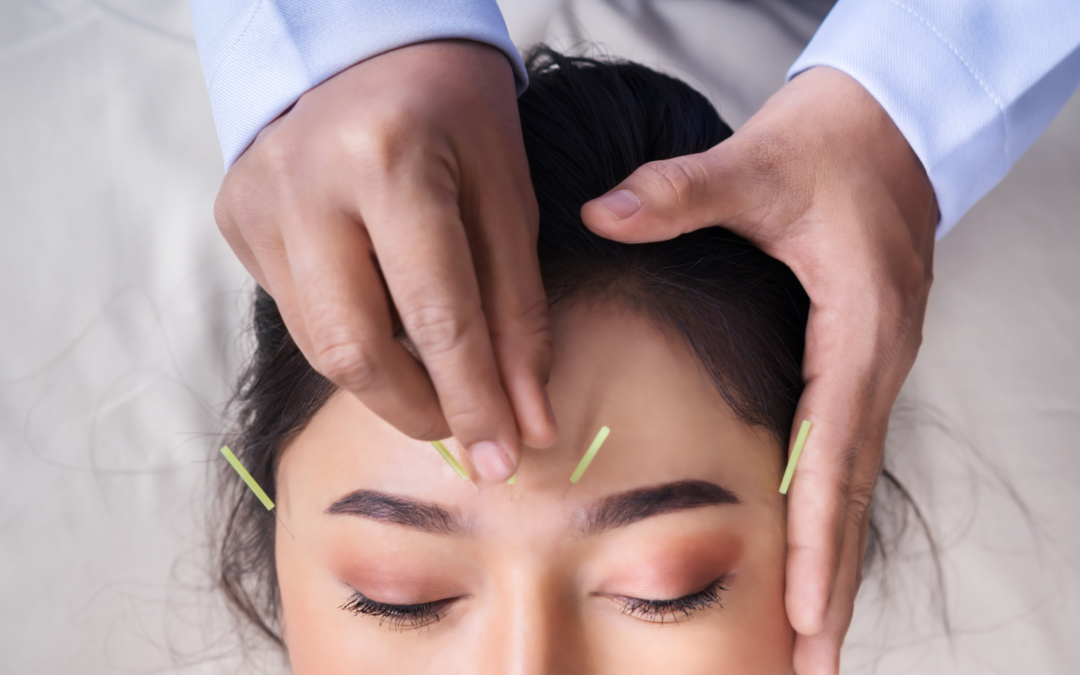
Locally, tiny sterile needles are placed along lines, areas of sagging, or dullness to stimulate collagen, circulation, and micro-repair.
Systemically, we support the root.
Points like ST36 and SP6 nourish digestion and Blood.
LR3 softens tension patterns.
KI3 supports deeper constitutional strength.
Because your skin is not separate from your hormones.
Or your sleep.
Or your stress.
Or the fact that you’ve been holding everything together for years.
Research supports what practitioners have observed for centuries. A Korean pilot study found measurable improvements in facial elasticity after treatment . Other preliminary studies show improvements in hydration and tone .
But what I love most?
Women often report better sleep.
Fewer headaches.
Calmer moods.
Steadier digestion.
The glow is a side effect of balance.
And Then There’s Gua Sha
If acupuncture is the scholar, gua sha is the grandmother.
Across Asia, scraping techniques have been used for generations under different names. In Cambodia, it’s called goh kyol. In Vietnam, cạo gió. In Laos, khoud. It was never designed as a beauty ritual.
It was care.
Oil on the skin.
A coin or spoon in steady hands.
Scrape until the stagnation rises.
Modern research shows gua sha improves microcirculation and modulates inflammation . In the clinic, facial gua sha is gentler, upward and outward strokes that de-puff, release jaw tension, and brighten the complexion.
But the principle is unchanged:
Move what is stuck.
Restore flow.
Let the body reset.
The sculpted cheekbone is just the visible echo.
This Is Different From Injectables
From a TCM perspective, anything that creates stagnation in the channels can have consequences. Botox and fillers change the surface. Cosmetic acupuncture works with the body’s existing intelligence.
You still look like you.
Just less exhausted.
Less inflamed.
Less tightly wound.
Your face becomes softer because your system is softer.
And that matters.
What Treatment Looks Like Here
Cosmetic acupuncture is never rushed.
You’re on a warm table.
Blankets tucked around you.
Needles are fine and gentle.
We work the face and the root together.
Typical protocol:
• Weekly sessions for 10 weeks
• Combination of facial and systemic acupuncture points
• Facial massage, gua sha and cupping integration
• Monthly maintenance once we’ve built momentum
You might notice:
• Softer lines
• Improved tone
• Reduced puffiness
• Less jaw tension
• Brighter eyes
• Better sleep
This is not a one and done fix. (Not that any cosmetic treatment is.)
It’s cultivation.
Like tending a garden instead of spray painting the leaves.
The Deeper Part We Don’t Talk About Enough
Many of the women who come for cosmetic acupuncture are very good at holding everyone else together.
They manage homes.
Businesses.
Kids who don’t sleep.
Hormones that feel unpredictable.
A nervous system that hasn’t truly exhaled in years.
Cosmetic acupuncture gives them permission to lie down and receive.
And when the nervous system shifts from guarded to safe, circulation changes. Digestion improves. Muscles soften. The Shen settles.
The face reflects that.
That glow?
It’s relief.
Ancient, Modern, and Deeply Relevant
Acupuncture’s classical foundations were laid in texts like the Huangdi Neijing over two thousand years ago. Gua sha has been preserved through generations of family care and later studied in modern research .
Today, they live in both clinics and homes.
They are not trends.
They are traditions that understand something modern Western culture often forgets:
Beauty is what happens when the body feels safe, nourished, and in balance.
If you’re curious about cosmetic acupuncture or TCM facial rejuvenation, I’d love to talk about what your skin is saying.
Not just what it looks like.
But what it reflects.
Because the most beautiful changes are the ones that come from the inside out.
A Gentle Note: I’m a student of Traditional Chinese Medicine, and this space reflects my learning as it unfolds. TCM is deep, layered, and complex, and I’m still finding my footing within it. I will refine my understanding over time. I will make mistakes. That’s part of doing this honestly. What I share here is my current perspective, shaped by my teachers, clinical training, lived experience, and my own biases. It’s not absolute, it’s evolving. I welcome thoughtful conversation, shared insight, and respectful correction along the way. I humbly welcome your insight. Let’s learn together. You can always find me over on Instagram to keep the conversation going.