If Tai Yang invasion is the draft at the door…
Shao Yang is that awkward space where you’re not sure if you’re coming down with something or getting over it.
It’s not fully outside.
It’s not fully inside.
And this is where my brain starts mixing files again.
So let’s sort it the same way.
Not by chapter headings.
By how it actually shows up in a body.
First: What is Shao Yang?
Shao Yang is the half exterior, half interior layer.
It’s the pivot.
In the Shang Han Lun framework, this is what happens when the pathogen moves past Tai Yang… but doesn’t go all the way in.
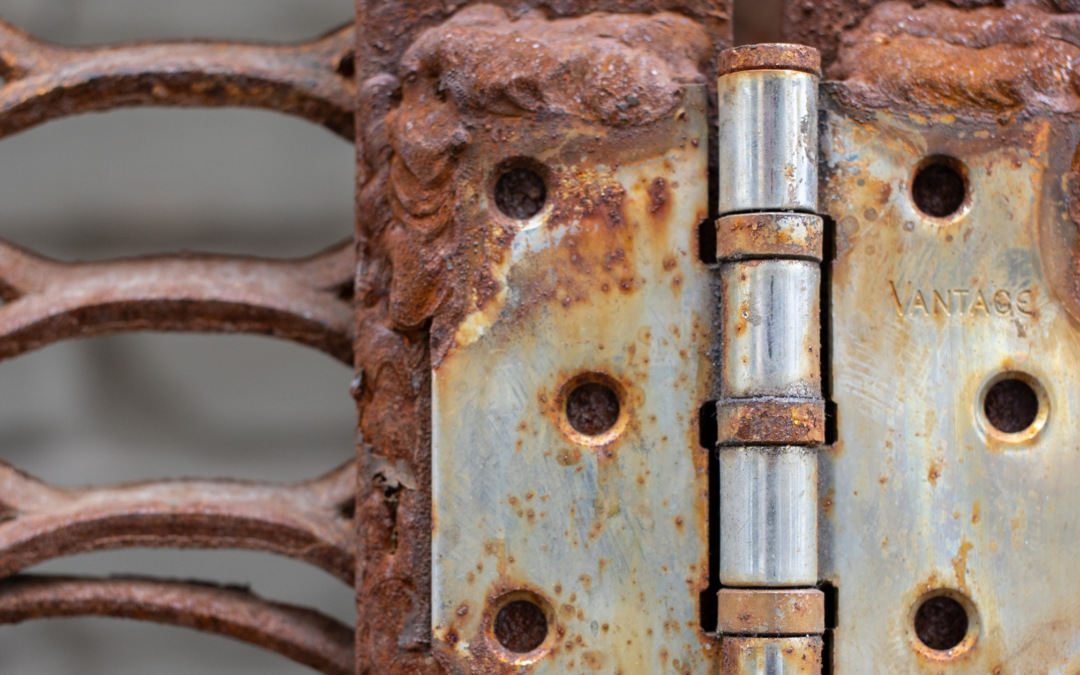
It gets stuck in the hinge.
This is where you see:
Alternating chills and fever.
Not just cold. Not just heat.
Back and forth.
If Tai Yang is “I just caught something,”
Shao Yang is “Why has this been weird for five days?”
Organs + Channels
Shao Yang corresponds to:
Gallbladder (Foot Shao Yang)
San Jiao / Triple Burner (Hand Shao Yang)
And again, this is where it gets layered.
Six Stages = disease progression model.
Zang Fu = organ physiology.
Channel theory = meridian pathways.
Shao Yang isn’t just a stage.
It’s a pattern that shows up through multiple systems.
Channel Pathways (The Physical Feel)
Gallbladder Channel
Runs from the outer canthus → side of head → lateral body → hip → outer leg → 4th toe.
This is your:
Temporal headaches
Side of the head migraines
Rib side tension
Hip tightness
IT band pain
If someone points to the side of their body and says,
“It’s right here.”
Think Shao Yang.
It lives on the lateral line.
San Jiao Channel
Runs from the ring finger → posterior arm → shoulder → side of neck → ear → temple.
Think:
Ear issues
Temporal pain
Side neck stiffness
Shoulder tension
And then beyond musculoskeletal stuff…
San Jiao regulates fluid movement and qi circulation between the burners.
Which makes sense.
Because Shao Yang is about movement between layers.
Shao Yang in the Six Stages
In the classics, Shao Yang presents with:
Alternating chills and fever
Bitter taste in the mouth
Dry throat
Dizziness
Hypochondriac fullness
Wiry pulse
The key word is alternating.
Up and down.
Hot and cold.
Better, then worse.
It’s unstable.
The pathogen isn’t gone.
But it hasn’t fully internalized either.
It’s caught in the hinge.
Physiological Functions (Zang Fu View)
Gallbladder
Stores and excretes bile.
Supports digestion.
Assists Liver in decision making.
Emotionally, it governs courage.
When it’s balanced, you act cleanly and clearly.
When it’s disrupted, you hesitate.
San Jiao
Regulates water pathways.
Moves Yuan Qi.
Coordinates upper, middle, and lower burners.
It doesn’t have a physical structure like other organs.
It’s a system of regulation.
Which feels very Shao Yang.
It’s not substance.
It’s coordination.
Emotional Layer (Where It Gets Subtle)
Shao Yang emotionally feels like:
Irritability
Indecision
Frustration
Mood that shifts
Hot and cold energy
Not fully angry like Yang Ming heat.
Not guarded like Tai Yang.
It’s more:
“I can’t land.”
Gallbladder governs decision making.
When Shao Yang is off, people feel stuck between options.
Not collapsed.
Not inflamed.
Just… pivoting.
How I’m Trying to Organize It in My Brain
Instead of memorizing lists, I group it like this:
Layer
– Half exterior, half interior
– Pivot stage
Location
– Lateral head
– Rib sides
– Hips
– Outer thighs
Pathogen
– Often unresolved Wind-Cold
– Lingering stage
Function
– Regulation between layers
– Decision-making
– Fluid movement
Emotion
– Irritable
– Indecisive
– Alternating
If I remember:
Pivot
Lateral
Alternating
It clicks faster.
Why This Matters Clinically
Because when someone comes in with:
Temporal migraine
Rib side tension
Alternating hot and cold sensations
Bitter taste
Wiry pulse
You’re not thinking about theory first.
You’re thinking:
Side of the body.
Symptoms that swing.
Something stuck in between.
Shao Yang.
And the moment you see it that way, it simplifies.
And Honestly?
This layer used to confuse me the most.
Because it doesn’t sit cleanly anywhere.
But maybe that’s the point.
Shao Yang is the hallway.
The hinge.
The place where the body decides:
Are we resolving this…
Or are we going deeper?
And once you see it as the pivot instead of a list of symptoms,
It stops feeling like a memorization problem.
It starts feeling like pattern recognition.
A Gentle Note: I’m a student of Traditional Chinese Medicine, and this space reflects my learning as it unfolds. TCM is deep, layered, and complex, and I’m still finding my footing within it. I will refine my understanding over time. I will make mistakes. That’s part of doing this honestly. What I share here is my current perspective, shaped by my teachers, clinical training, lived experience, and my own biases. It’s not absolute, it’s evolving. I welcome thoughtful conversation, shared insight, and respectful correction along the way. I humbly welcome your insight. Let’s learn together. You can always find me over on Instagram to keep the conversation going.