There’s something that shifts the moment you stop asking,
“What disease is this?”
and start asking,
“What pattern is unfolding here?”
That’s the heart of the Eight Principles in Traditional Chinese Medicine.
Before I learned this framework, symptoms felt scattered.
Headaches. Fatigue. Bloating. Insomnia. Cold hands. Anxiety.
In Western medicine, each of these might get their own box.
Migraine disorder. IBS. Generalized anxiety. Hormonal imbalance.
But in TCM, we pause and ask a different question:
Where is this happening?
What is the nature of it?
Is the body overwhelmed or depleted?
Is this more yin… or more yang?
The Eight Principles are the first map we use to answer that.
They’re organized into four paired relationships:
Exterior & Interior
Cold & Heat
Deficiency & Excess
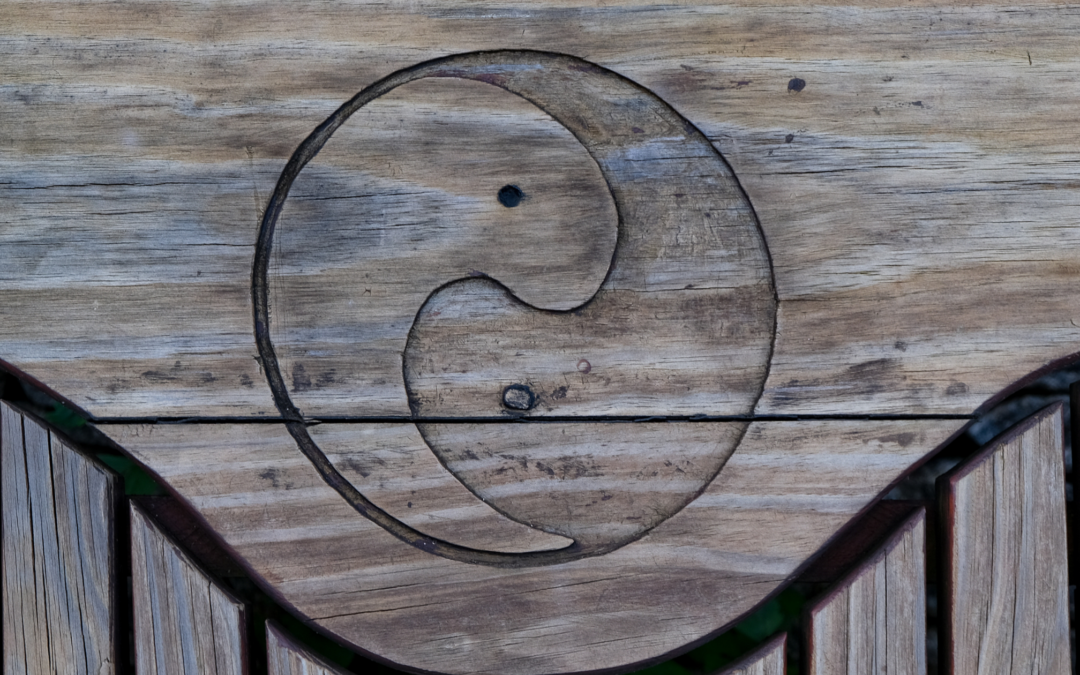
Yin & Yang
And they give us a functional understanding of what’s happening beneath the surface.
Let’s walk through them and I’ll layer in how this compares to Western diagnostics so you can see where they overlap and where they diverge.
Exterior & Interior
(Location and Depth of Illness)
Exterior patterns involve the surface of the body, skin, muscles, channels, defensive qi.
This is your classic “I woke up with chills, body aches, and a stiff neck” picture. In Western terms, this might correspond to:
• Viral upper respiratory infection
• Early influenza
• Acute inflammatory response
Research shows that during early viral infection, pro-inflammatory cytokines increase rapidly, producing fever, chills, and muscle pain. Western medicine sees immune activation.
TCM sees wind-cold or wind-heat invading the exterior.
The difference?
Western medicine focuses on identifying the pathogen.
TCM focuses on where it is and how the body is responding.
Interior patterns, by contrast, involve the organs and deeper physiology.
Think:
• Chronic fatigue
• IBS
• Endometriosis
• Long standing anxiety
• Autoimmune conditions
In Western diagnostics, we often rely on lab testing, imaging, and pathology to confirm structural or biochemical abnormalities.
TCM may diagnose:
• Spleen Qi Deficiency
• Liver Qi Stagnation
• Kidney Yin Deficiency
• Phlegm-Damp accumulation
Western medicine excels at detecting structural damage.
TCM excels at recognizing functional imbalance before structural disease develops.
They are not enemies. They are looking at different layers of the same body.
Cold & Heat
(The Nature of the Imbalance)
Cold and Heat are often the first qualities patients notice in themselves.
Western medicine recognizes “heat” as inflammation, fever, infection, hypermetabolic states.
Examples:
• Elevated CRP
• Fever
• Autoimmune flares
• Hyperthyroidism
• Acute gastritis
Heat patterns in TCM might look like:
• Red face
• Thirst
• Restlessness
• Dark urine
• Rapid pulse
Cold patterns, meanwhile, may correspond in Western language to:
• Hypothyroidism
• Low metabolic rate
• Poor circulation
• Chronic fatigue states
Research shows that reduced thyroid hormone activity lowers basal metabolic rate and thermogenesis.
TCM might call this Yang Deficiency.
But here’s where it gets more nuanced.
TCM differentiates:
Excess Heat, like acute infection or inflammatory bronchitis
Deficiency Heat, like night sweats from estrogen decline in perimenopause
Western medicine may classify both under “hormonal imbalance” or “inflammatory markers,” but TCM distinguishes the mechanism.
That distinction changes treatment entirely.
Deficiency & Excess
(Strength of the Body vs. Strength of the Pathogen)
This is where pattern differentiation becomes deeply clinical.
Excess patterns are strong, obstructive, intense.
Think:
• Gallstones causing sharp fixed pain
• Severe menstrual clotting
• Acute sinus congestion
• Hypertensive crisis
Western medicine sees obstruction, inflammation, accumulation.
TCM sees:
• Blood Stagnation
• Phlegm accumulation
• Liver Yang Rising
Deficiency patterns are quieter.
They are the slow erosion states.
• Iron deficiency anemia
• Adrenal exhaustion
• Postpartum depletion
• Chronic malabsorption
In Western research, chronic stress is shown to dysregulate the HPA axis, leading to cortisol imbalance and fatigue.
TCM may describe the same presentation as:
• Qi Deficiency
• Blood Deficiency
• Kidney Yin Deficiency
What Western medicine often labels as “subclinical” or “normal labs but persistent symptoms,” TCM may still identify as a clear deficiency pattern.
And perhaps most importantly:
Deficiency and Excess often coexist.
A woman with Spleen Qi Deficiency may develop Damp accumulation.
A person with chronic depletion may develop reactive inflammation.
Western medicine separates these into multiple diagnoses.
TCM holds them in one coherent pattern.
Yin & Yang
(The Master Framework)
Yin and Yang are not poetic metaphors.
They are a dynamic regulatory model.
Modern research increasingly supports the idea that health depends on balance between:
• Sympathetic and parasympathetic nervous system
• Catabolic and anabolic states
• Pro-inflammatory and anti-inflammatory pathways
• Oxidative stress and antioxidant capacity
TCM has described this dynamic balance for thousands of years through Yin and Yang.
Yin represents:
• Cooling
• Nourishing
• Substance
• Rest
• Parasympathetic dominance
Yang represents:
• Activity
• Heat
• Metabolism
• Function
• Sympathetic activation
When Yin is deficient, we may see:
• Night sweats
• Insomnia
• Anxiety
• Dryness
• Perimenopausal symptoms
When Yang is deficient:
• Cold limbs
• Edema
• Low motivation
• Slow digestion
• Depression with apathy
Western medicine may treat each symptom individually.
TCM recognizes a unifying regulatory imbalance.
So What Does This Mean for Patients?
Western medicine is exceptional at:
• Acute emergencies
• Surgical intervention
• Detecting structural disease
• Lab precision
• Imaging diagnostics
TCM is exceptional at:
• Early dysfunction
• Pattern recognition
• Functional regulation
• Individualized treatment
• Preventative care
Western diagnosis names the disease.
TCM explains the terrain.
And sometimes the terrain matters more than the label.
Because two women can both have migraines.
One may have Liver Yang Rising from stress and tension.
The other may have Blood Deficiency after years of depletion.
Same Western diagnosis.
Completely different TCM treatment.
The Bridge Between Systems
We don’t need to choose one or the other.
In fact, integrative care is showing increasing promise in research for:
• Chronic pain
• Fertility support
• IBS
• Menopausal symptoms
• Anxiety disorders
Acupuncture has been shown in systematic reviews to modulate inflammatory markers, regulate autonomic nervous system activity, and influence neuroendocrine pathways.
Western medicine measures biomarkers.
TCM measures pattern.
Both are valuable.
But if you’ve ever been told “your labs are normal” while you still feel unwell…
You already understand why pattern differentiation matters.
The Real Power of the Eight Principles
The Eight Principles don’t just categorize illness.
They teach us how to listen.
When someone says:
“I’m exhausted but wired at night.”
That’s Yin and Yang.
When someone says:
“My pain is sharp and fixed.”
That’s Excess.
When someone says:
“I always feel cold, even in summer.”
That’s Yang Deficiency.
I
t’s not about memorizing theory.
It’s about learning to hear the body differently.
And once you do, you can’t unhear it.
A Gentle Note: I’m a student of Traditional Chinese Medicine, and this space reflects my learning as it unfolds. TCM is deep, layered, and complex, and I’m still finding my footing within it. I will refine my understanding over time. I will make mistakes. That’s part of doing this honestly. What I share here is my current perspective, shaped by my teachers, clinical training, lived experience, and my own biases. It’s not absolute, it’s evolving. I welcome thoughtful conversation, shared insight, and respectful correction along the way. I humbly welcome your insight. Let’s learn together. You can always find me over on Instagram to keep the conversation going.