If you live around Woodstock, New Brunswick, you’ve probably noticed more and more places offering “acupuncture.”
Chiropractic offices, physiotherapy clinics, massage studios, everyone seems to have it on their service list these days.
Here’s the truth most people don’t know: not all acupuncture is the same.
In fact, much of what’s being offered locally isn’t acupuncture at all. It’s dry needling, a technique that borrows the tool (the needle) but not the medicine behind it.
And that difference matters.
Dry Needling: The Mechanical Approach
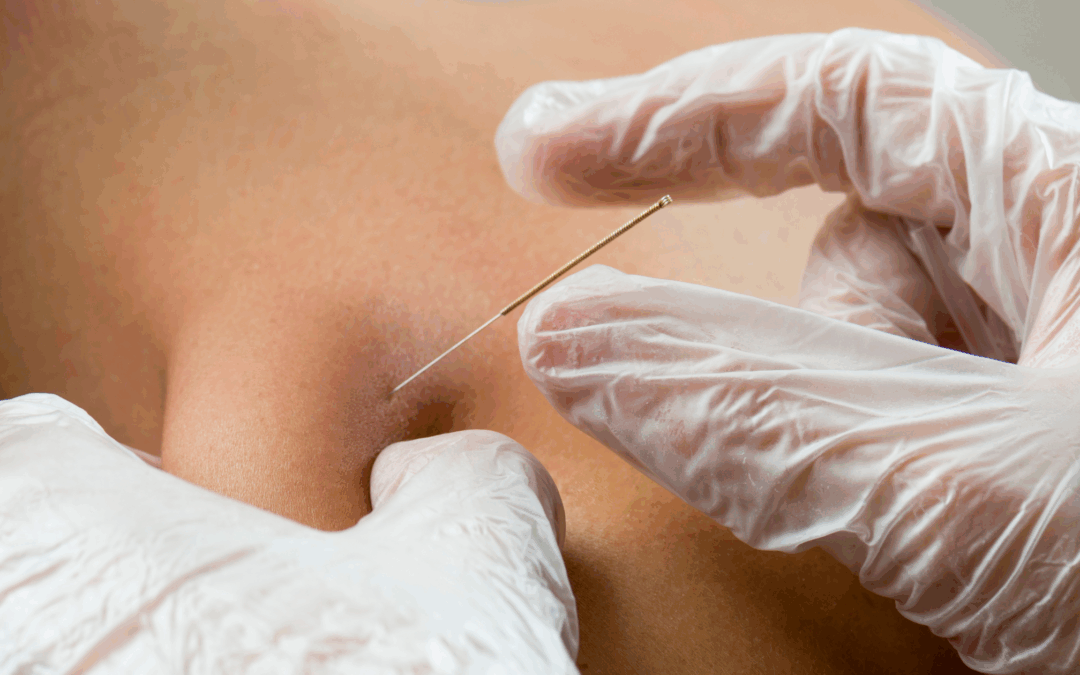
Dry needling is a modern, Western technique. It’s designed to treat muscle tension, trigger points, and pain by inserting needles into tight spots to get them to release.
It can be effective for what it’s meant to do, help sore muscles loosen up, reduce inflammation, or improve range of motion.
The issue isn’t that dry needling doesn’t work. It’s that it’s often presented as acupuncture when it’s not.
Most dry needling courses are short trainings — sometimes just a few weekends long. They teach anatomy and muscle release, but they don’t teach Traditional Chinese Medicine (TCM), which is the entire theoretical system that gives acupuncture its power and depth.
Traditional Chinese Medicine: The Whole System View
A Registered Acupuncturist or Doctor of TCM completes a 3-5 year diploma program, studying not only anatomy and physiology, but also the energetic systems that connect every organ, tissue, and emotion in the body.
We study the meridians, the channels that carry Qi (vital energy) and Blood through your body.
We learn to read your tongue and pulse, understand the language of your body’s subtle patterns, and connect symptoms across systems, from digestion to sleep, hormones to mood, skin to fertility.
That’s what makes acupuncture medicine, not just mechanics.
When I choose a point, I’m not just needling a muscle.
I’m working with your whole internal landscape, your energy, your emotions, your organ systems, to restore balance and help your body remember how to heal.
Why This Matters for Your Care
Let’s say you have shoulder pain.
A dry needling practitioner might place a few needles directly into the tight spots around the shoulder. That can help, for a while.
A TCM practitioner looks at why that pain is showing up.
Is it from overuse and stagnation of Qi?
From emotional tension and Liver imbalance?
From blood deficiency or cold obstructing the channels?
Each root cause calls for a different treatment, and different points, because real acupuncture treats the pattern, not just the part.
That’s why two people with the same pain often get completely different treatments from a TCM acupuncturist.
How to Tell the Difference
If you’re in New Brunswick and want to know you’re receiving true acupuncture, look for someone who is:
- A Registered Acupuncturist (R.Ac.) or Doctor of TCM (Dr. TCM)
- Taking your tongue and pulse before treatment
- Asking about your sleep, digestion, cycle, and mood
- Explaining your pattern of imbalance, not just your sore muscle
- Sometimes using moxa, cupping, gua sha, or herbal guidance alongside needles
Those are signs you’re getting authentic acupuncture grounded in Traditional Chinese Medicine, not just a mechanical version of it.
Don’t get me wrong, if you’re prioritizing physiotherapy and chiropractic care having some dry needling added to your care is wonderful, but that doesn’t make it true acupuncture!
The Real Medicine
Dry needling is a useful tool for releasing tension, but acupuncture as practiced through TCM is a whole-body reset.
It calms your nervous system, regulates hormones, supports digestion, improves sleep, and helps your body find balance from the inside out.
So if you’ve tried “acupuncture” before and didn’t feel much difference, it might be because you haven’t actually experienced real acupuncture yet.
I’ll be practicing in Halifax through 2026 while completing my clinical training and opening my full women’s wellness clinic in Carleton County soon after.
My focus is the deep medicine, the kind that treats root causes, not just symptoms.
Because this medicine deserves to be practiced in full.
A Gentle Note: I’m a student of Traditional Chinese Medicine, and this space reflects my learning as it unfolds. TCM is deep, layered, and complex, and I’m still finding my footing within it. I will refine my understanding over time. I will make mistakes. That’s part of doing this honestly. What I share here is my current perspective, shaped by my teachers, clinical training, lived experience, and my own biases. It’s not absolute, it’s evolving. I welcome thoughtful conversation, shared insight, and respectful correction along the way. I humbly welcome your insight. Let’s learn together. You can always find me over on Instagram to keep the conversation going.