When I started acupuncture school at Canadian College of Acupuncture and Traditional Medicine, I thought I knew exactly what I was signing up for.
Needles.
Point location.
Meridians.
Pulse diagnosis.
Ancient theory.
Maybe a little bit of anatomy induced panic.
Standard acupuncture student stuff.
What I didn’t expect?
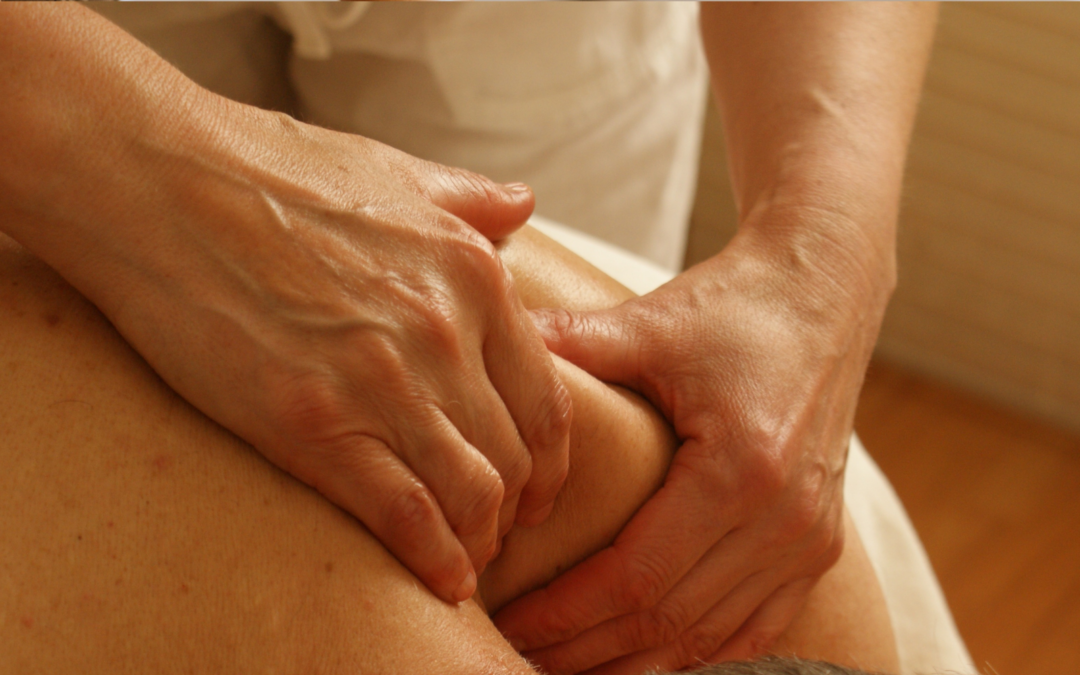
That I would spend so much of my training learning Tui Na.
And I definitely didn’t expect to fall in love with it.
Like most people, when I thought about acupuncture school, I imagined long days memorizing point functions and eventually learning how to needle with confidence. I assumed bodywork would be a small side skill, something nice to have, maybe useful here and there.
Instead, I found myself spending more time learning hands on techniques than I did learning actual needle manipulation.
That genuinely surprised me.
Rolling.
Pressing.
Kneading.
Grasping.
Pushing.
Following channels.
Learning to feel changes in tissue.
Learning what healthy tissue feels like… and what it feels like when something is off.
At first, I remember thinking:
Wait… why am I learning this much massage in acupuncture school?
Now I understand.
Because Tui Na isn’t “just massage.”
Not even close.
Tui Na Is Treatment… But It’s Also Diagnosis
One of the biggest misconceptions about Tui Na is that it’s just relaxation massage with a Chinese name.
It’s not.
It’s clinical.
It’s intentional.
And maybe most importantly—it’s diagnostic.
The more I work with patients in student clinic, the more I realize how much information lives under your hands.
A shoulder that looks relaxed but feels like steel cable.
A jaw that immediately tells you someone’s been clenching through stress for years.
A neck that explains headaches before the patient even mentions them.
An abdomen that tells a completely different story than the intake form.
Before I ever place a needle, I’m already gathering information.
Tissue tone.
A nodule or blockage in a meridian.
Temperature.
Fascial restrictions.
Tenderness.
Guarding.
Muscular imbalance.
Sometimes a patient’s body tells me more in thirty seconds of touch than five minutes of talking.
And honestly?
That part has become one of my favorite parts of clinic.
Because this medicine isn’t just intellectual.
It’s tactile.
It’s hands on.
It’s learning how to listen through touch.
It Changed How I Treat
There’s something incredibly powerful about starting with your hands before reaching for a needle.
Sometimes patients walk in nervous.
Sometimes they tell me they hate needles.
Sometimes their nervous system is so switched on that even lying down on the treatment table feels unfamiliar.
That’s where Tui Na becomes one of the most valuable tools I have.
It helps people settle.
It builds trust.
It gives me immediate feedback.
And sometimes it completely changes the treatment plan.
Because once your hands start listening, your treatments start getting smarter.
And Then Cosmetic Acupuncture Changed Everything
What really surprised me was how important Tui Na became once I started studying cosmetic acupuncture.
Because here’s what most people don’t realize:
You can put needles in the face…
…but if the neck is tight, the shoulders live somewhere near your ears, your jaw is clenching, and your scalp barely moves…
You’re leaving results on the table.
And this is where things get really interesting.
Why Body Tension Shows Up On Your Face
The face doesn’t exist in isolation.
Your skin is connected to muscle.
Muscle is connected to fascia.
Fascia is connected to posture.
Posture is connected to breathing.
Breathing is connected to your nervous system.
And all of it shows up on your face.
When the muscles of the neck, upper back, jaw, scalp, and face stay chronically tight, a few things can start happening:
- Blood flow to facial tissues may become less efficient.
- Lymphatic drainage may slow, contributing to puffiness or heaviness.
- Chronic muscle tension can pull on fascia and skin in repetitive patterns.
- Habitual facial holding can deepen expression lines over time.
- Stress driven tension can contribute to asymmetry, compression, and that “tired” look.
This is one reason someone can spend a fortune on skincare…
…and still look exhausted.
Because skin doesn’t just need products.
It needs circulation.
Movement.
Relaxation.
Oxygenation.
Healthy tissue.
The “You Look Rested” Effect
In cosmetic treatments, I often work far beyond the face.
Upper traps.
SCM.
Suboccipitals.
Jaw muscles.
Scalp.
Sometimes chest opening.
Sometimes shoulder release.
And when these tissues start letting go?
You can actually see it.
Eyes can look brighter and more open.
Brows can soften.
Jaw lines can look less compressed.
Facial asymmetries caused by chronic tension can become less obvious.
Skin often looks warmer, healthier, and more alive.
Not because we’re “lifting” the face in some magical way.
But because healthier tissue behaves differently.
The Science Side
From a more modern perspective, massage and soft tissue work may support:
- Increased local circulation
- Better oxygen and nutrient delivery to tissues
- Improved lymphatic movement
- Better fascial glide between tissue layers
- Reduced sympathetic nervous system dominance (fight or flight mode)
- Less chronic muscular contraction that contributes to repetitive creasing
In other words…
Looking fresh often has less to do with chasing youth and a lot more to do with restoring movement.
And that’s one of the reasons I’ve become so passionate about combining cosmetic acupuncture with Tui Na.
Because sometimes the goal isn’t to look different.
It’s to look like yourself…
Just less exhausted.
And honestly?
That’s something I never expected to learn from “massage school” hidden inside acupuncture school.
A Gentle Note: I’m a student of Traditional Chinese Medicine, and this space reflects my learning as it unfolds. TCM is deep, layered, and complex, and I’m still finding my footing within it. I will refine my understanding over time. I will make mistakes. That’s part of doing this honestly. What I share here is my current perspective, shaped by my teachers, clinical training, lived experience, and my own biases. It’s not absolute, it’s evolving. I welcome thoughtful conversation, shared insight, and respectful correction along the way. I humbly welcome your insight. Let’s learn together. You can always find me over on Instagram to keep the conversation going.