Most people who feel exhausted, run down, or unsupported in their bodies end up being told the same things.
Eat more protein.
Cut carbs.
Try porridge.
Try fasting.
Eat clean.
Try something stricter.
Try something gentler.
And when one of those works beautifully for someone else but makes you feel worse, it’s easy to assume you’re doing it wrong.
But here’s the truth: not all low energy is the same, and not all bodies are asking for the same kind of support.
Two people can share the same symptoms (fatigue, heaviness, prolapse, digestive issues) and need opposite approaches. Understanding the difference can save a lot of frustration.
Two bodies. Same symptoms. Very different needs.
We tend to see two broad patterns show up again and again.
Not diagnoses.
Not labels.
Just lived experience.
One body feels heavy and bogged down. The other feels empty and worn thin.
Both might say, “I’m exhausted.”
But they mean very different things.
The heavy, bogged down body
This is the body that feels like it’s constantly pushing through resistance.
People often describe:
- Feeling weighed down or sluggish
- A sense of fullness or bloating, even without eating much
- Brain fog or pressure in the head
- Puffiness or swelling
- Energy that feels stuck rather than absent
Digestion gives strong clues here:
- Bloating shows up easily
- Stools tend to be loose or messy
- High fiber foods or lots of plants feel overwhelming
- Skipping meals sometimes feels better than eating
Weather and environment matter too:
- Damp, rainy days make everything worse
- Cold settles into the body
- Warmth, salt, and fat feel comforting and stabilizing
When people with this pattern simplify their diet (sometimes dramatically) something shifts.
Eating mostly animal foods, eggs, broth, and fats often leads to:
- Less bloating
- A flatter, calmer abdomen
- Clearer thinking
- A feeling of being more “contained” in the body
For these bodies, the problem isn’t a lack of fuel.
It’s too much to process.
Reducing complexity gives the system breathing room.
The empty, sagging body
This body doesn’t feel heavy, it feels fragile.
People often describe:
- Feeling hollow or shaky
- Weakness that shows up quickly when standing or moving
- Fatigue that feels like there’s nothing in reserve
- Emotional sensitivity or overwhelm
- A sense that the body can’t quite “hold itself up”
Digestive patterns are different here:
- Digestion is slow but not especially bloated
- Stools may be normal or slightly dry
- Skipping meals makes things worse
- Long gaps without food lead to shakiness or anxiety
These bodies may swing between hot and cold, and dryness often shows up:
- Dry skin
- Dry mouth
- Thirst
- Restless sleep
Highly restrictive diets often feel harsh here. Even if there’s a brief burst of energy, it doesn’t last.
What does help tends to be:
- Warm, soft foods
- Soups, stews, porridges
- Eating regularly
- Foods that feel gentle and grounding rather than intense
For these bodies, the issue isn’t excess.
It’s not enough support to work with.
Why the same advice fails so many people
This is where things go wrong.
Both of these people might be told:
- “You need more protein.”
- “You need to heal your gut.”
- “You need to simplify.”
- “You need more nourishment.”
But without understanding what kind of weakness is present, well intended advice can backfire.
Simplifying food can be deeply stabilizing for a heavy, overwhelmed system.
That same simplification can feel drying, depleting, or destabilizing for a body that’s already worn thin.
Gentle, nourishing foods can help rebuild steadiness in an empty body.
Those same foods can worsen bloating and heaviness in a body that’s already struggling to process.
Neither approach is wrong.
They’re just not interchangeable.
Carnivore: when it helps, and when it doesn’t
Very simple, animal based eating can be incredibly effective when:
- Digestion feels overwhelmed
- Bloating dominates
- Heaviness is the main complaint
- The body feels cold and damp
- Less food feels better than more
In these cases, simplicity is medicine.
But for bodies that already feel depleted, fragile, or dry, the same approach can:
- Increase dryness
- Disrupt sleep
- Increase anxiety
- Create a sense of being “wired but tired”
- Lead to plateaus rather than restoration
That doesn’t mean it’s bad.
It means it’s too consolidating for the moment.
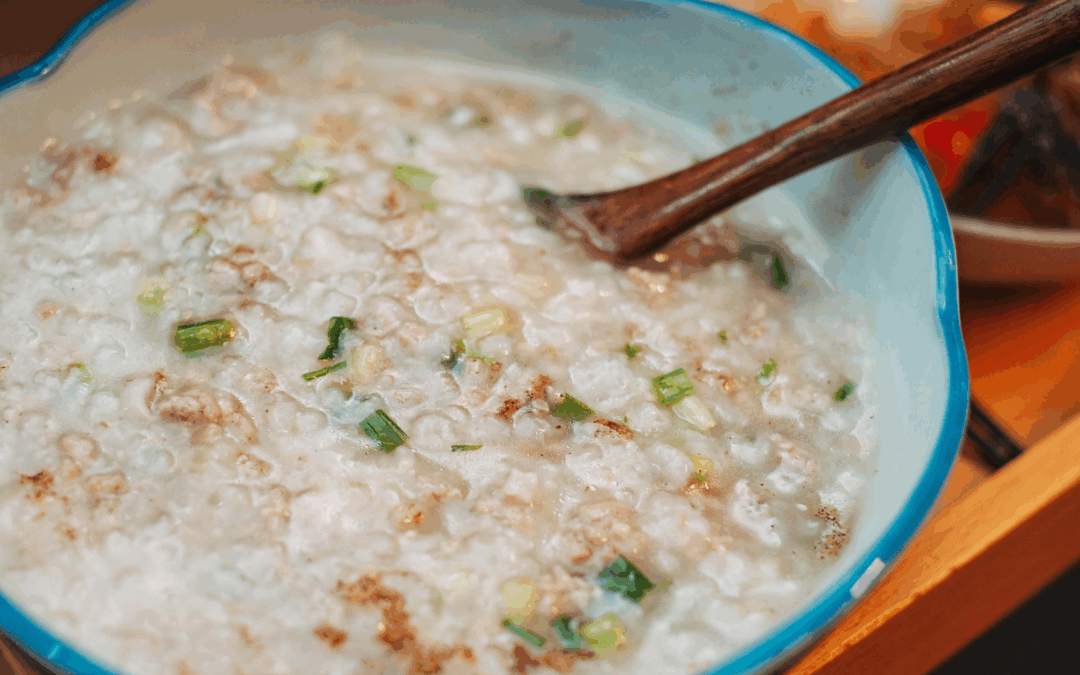
Congee and gentle foods: slow, steady rebuilding
Congee is about as unglamorous as food gets.
It’s soft.
It’s warm.
It’s repetitive.
It doesn’t deliver a dramatic boost.
And that’s exactly why it works for certain bodies.
For people who feel empty, shaky, or worn thin, warm porridge, soups, and stews provide:
- Steadiness instead of stimulation
- Gentle fuel that’s easy to access
- Support without demand
This kind of eating rarely feels exciting.
It feels supportive.
And for depleted systems, that’s often what allows real strength to return.
The most important question you can ask yourself
If you remember one thing from this post, let it be this:
Do I feel physically better when I eat less or when I eat more often?
- Feeling better eating less often points toward overload.
- Feeling better eating regularly points toward depletion.
Other helpful questions:
- Do I feel heavy or hollow?
- Does restriction calm my body, or stress it?
- Does softness help me recover, or make me feel worse?
Your answers matter more than any food rule.
This isn’t about choosing sides
This isn’t carnivore versus congee as identities.
It’s about timing.
It’s about listening.
It’s about recognizing that bodies are unique and bodies change.
What helps now may not be what helps forever.
Healing isn’t always about adding more or taking more away.
Sometimes it’s about choosing the right direction.
Heavy bodies often need clearing first.
Empty bodies often need filling first.
And many of us move between the two over time.
The body is rarely wrong.
We just have to learn how to hear what it’s actually asking for.
A Gentle Note: I’m a student of Traditional Chinese Medicine, and this space reflects my learning as it unfolds. TCM is deep, layered, and complex, and I’m still finding my footing within it. I will refine my understanding over time. I will make mistakes. That’s part of doing this honestly. What I share here is my current perspective, shaped by my teachers, clinical training, lived experience, and my own biases. It’s not absolute, it’s evolving. I welcome thoughtful conversation, shared insight, and respectful correction along the way. I humbly welcome your insight. Let’s learn together. You can always find me over on Instagram to keep the conversation going.