
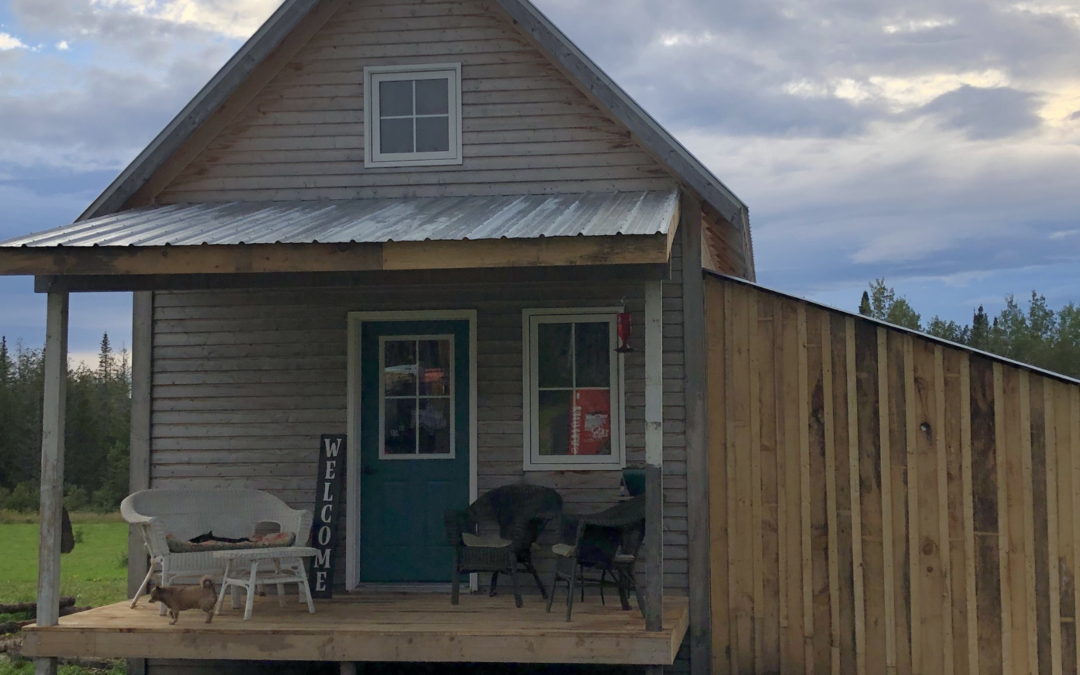
People hear “off grid” and imagine one of two things:
Either total isolated wilderness survival… or an aesthetic Instagram fantasy where someone in linen magically bakes sourdough by candlelight without ever sweating.
My version is somewhere in the middle.
Right now, while I’m living in Halifax finishing acupuncture school, going home to our homestead in South Knowlesville, New Brunswick for the weekend feels a lot like how other people head to their cabins.
The car gets packed with a cooler, groceries, gum boots, extra blankets, and whatever random supplies we forgot to bring last time. We arrive to a house that has been sitting still and empty. The air inside is cold and settled. You can smell wood, dust, earth, and that faint scent cabins get when only a mouse or two has been there.
So the first hours home are always about waking the place back up again.
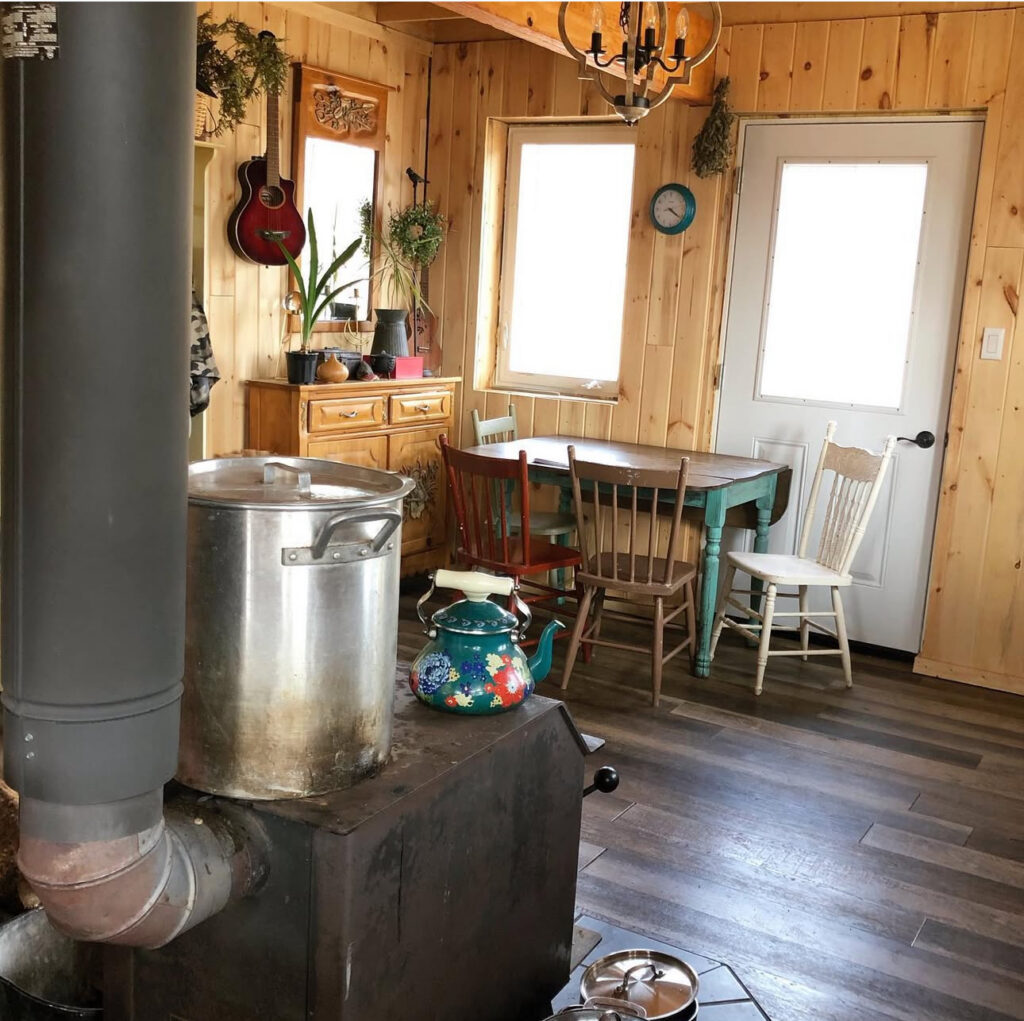
Unload the cooler that becomes our refrigerator for the weekend. Turn on the solar power system. Open the windows. Sweep the floors. Dust the surfaces. Pump water. Carry in wood. Chop kindling. Build a fire to push the chill out of the house. Put water on to heat for bathing, washing, and cleaning.
And immediately your nervous system changes pace.
No traffic.
No street lamps.
No constant hum of civilization.
Just the crackling woodstove, dogs running circles through the yard, birds calling back and forth through the trees, and the hand pump squeaking as someone fills carboys for the day.
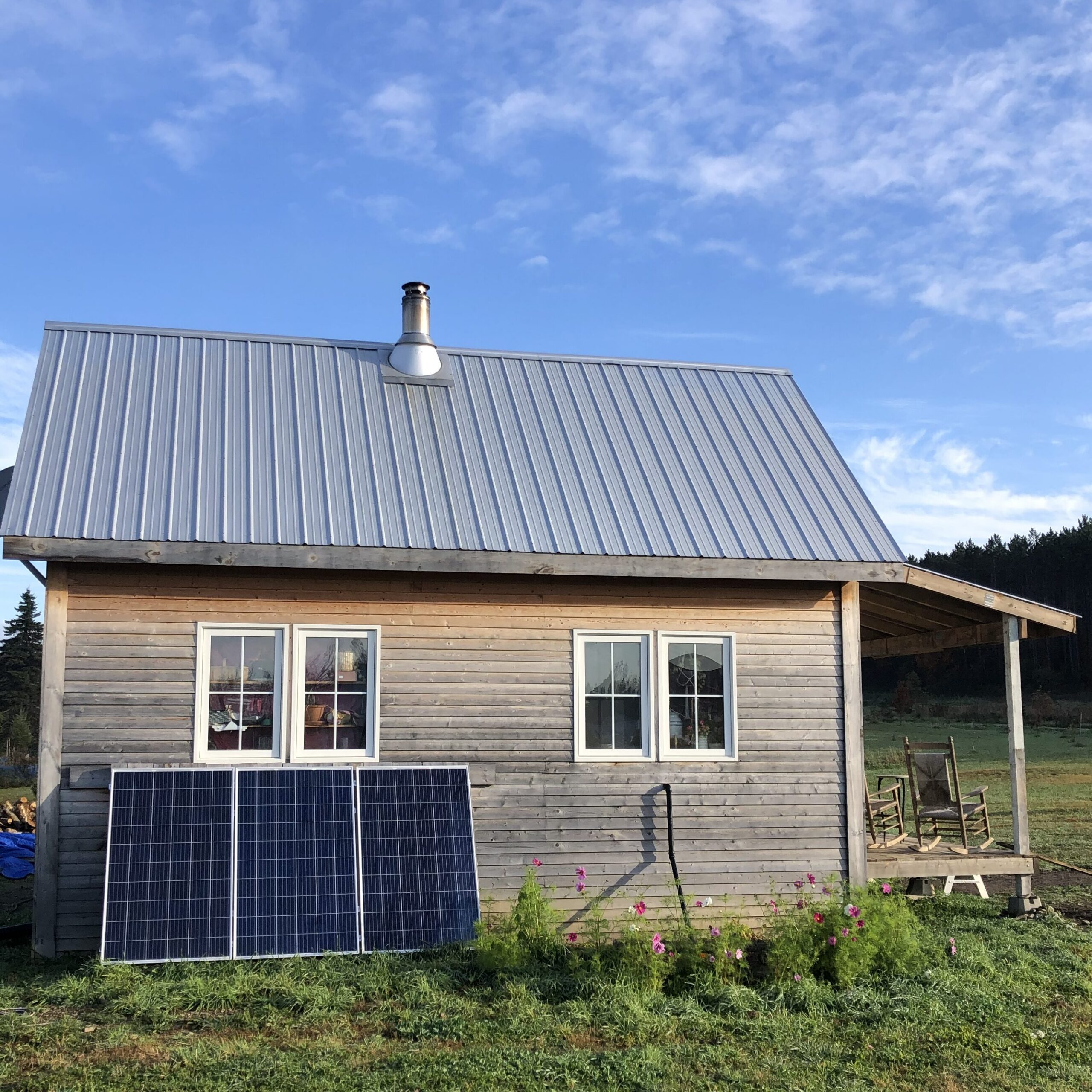
Morning chores feel very different when the systems of daily life are manual.
Someone takes the toilet bucket to compost. Someone pumps water for dishes, washing, and the day ahead. Water gets heated slowly on the woodstove for coffee and cleaning. Fires get rebuilt. Ash gets emptied. Kindling gets split. Nothing is especially difficult, but almost everything asks for your participation.
This weekend our grandson learned how to hand pump water, throwing his whole little body into the handle while all the adults cheered him on like he’d done something extraordinary.
And honestly, he had.
There’s something beautiful about children growing up understanding where things come from. That water doesn’t simply appear from walls. That warmth takes preparation. That homes require tending. That daily life is something you help create, not just consume.
Kids become capable very quickly when they’re trusted with real tasks and allowed to belong to the rhythm of life around them.
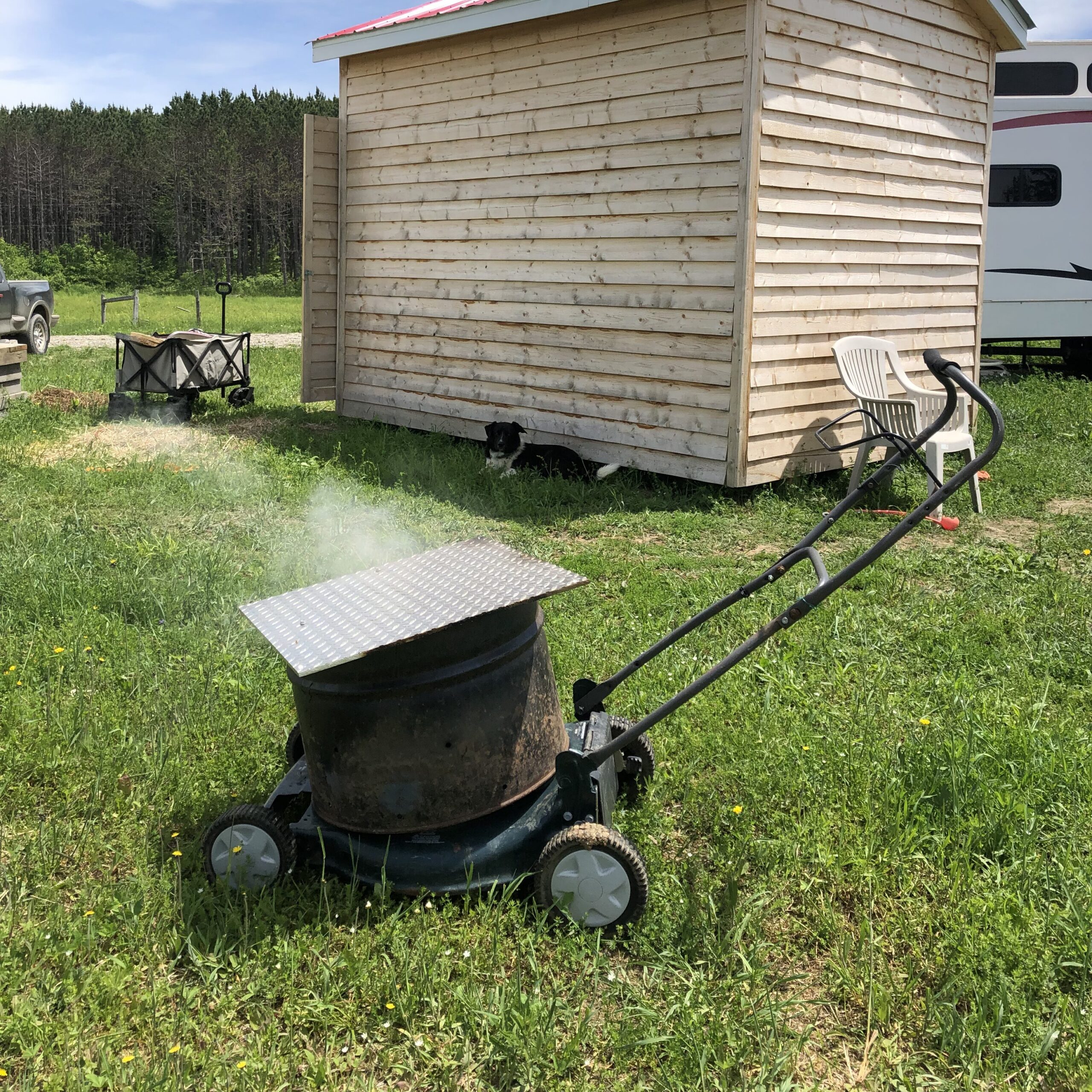
This time of year also means the blackflies are beginning their yearly campaign against humanity, so every morning starts with lighting a smudge or building a smoky little fire to keep them from carrying us all into the woods piece by piece.
By evening, the peepers take over.
If you’ve never heard spring peepers in rural New Brunswick, it’s almost impossible to explain. Thousands of tiny frogs screaming into the darkness so loudly that eventually your brain stops hearing individual sounds and it just becomes the soundtrack of night itself.
We went to bed shortly after sunset and woke naturally with the sun coming through the windows. Showered with buckets of water heated on the woodstove. Drank coffee slowly sitting on adirondack chairs in the sun. Let the dogs wander freely between neighbour houses visiting their dog friends like tiny woodland socialites.
This year the homestead feels especially simple.
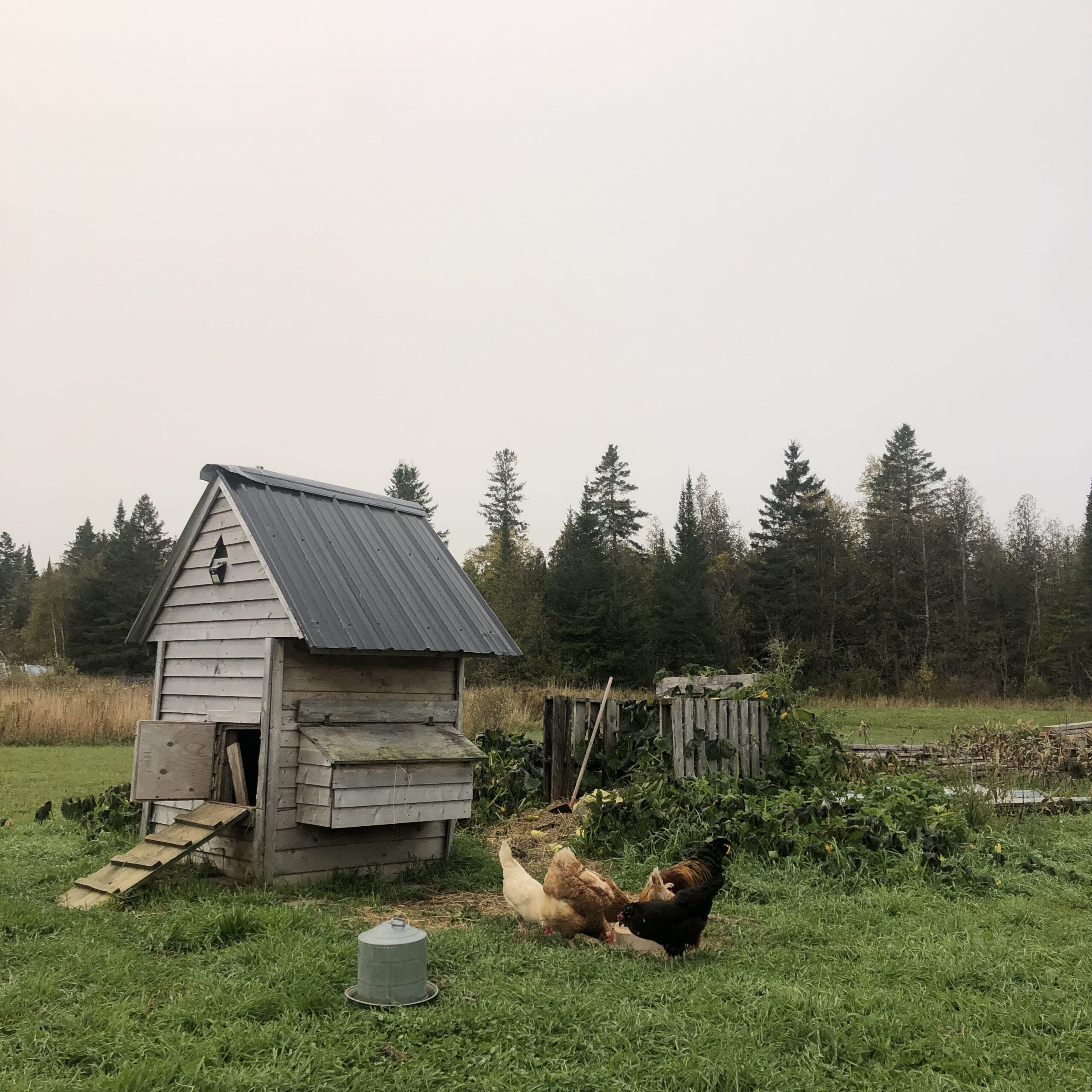
We’re not putting in a huge garden. We don’t have chickens or livestock this season. It’s still too early to mow. So instead of spending the weekend managing production, we spent it actually living.
Tea and long walks with my friends.
The annual neighbourhood dog show entirely organized by local children.
Dirtbike and side-by-side rides through the trails with family and friends.
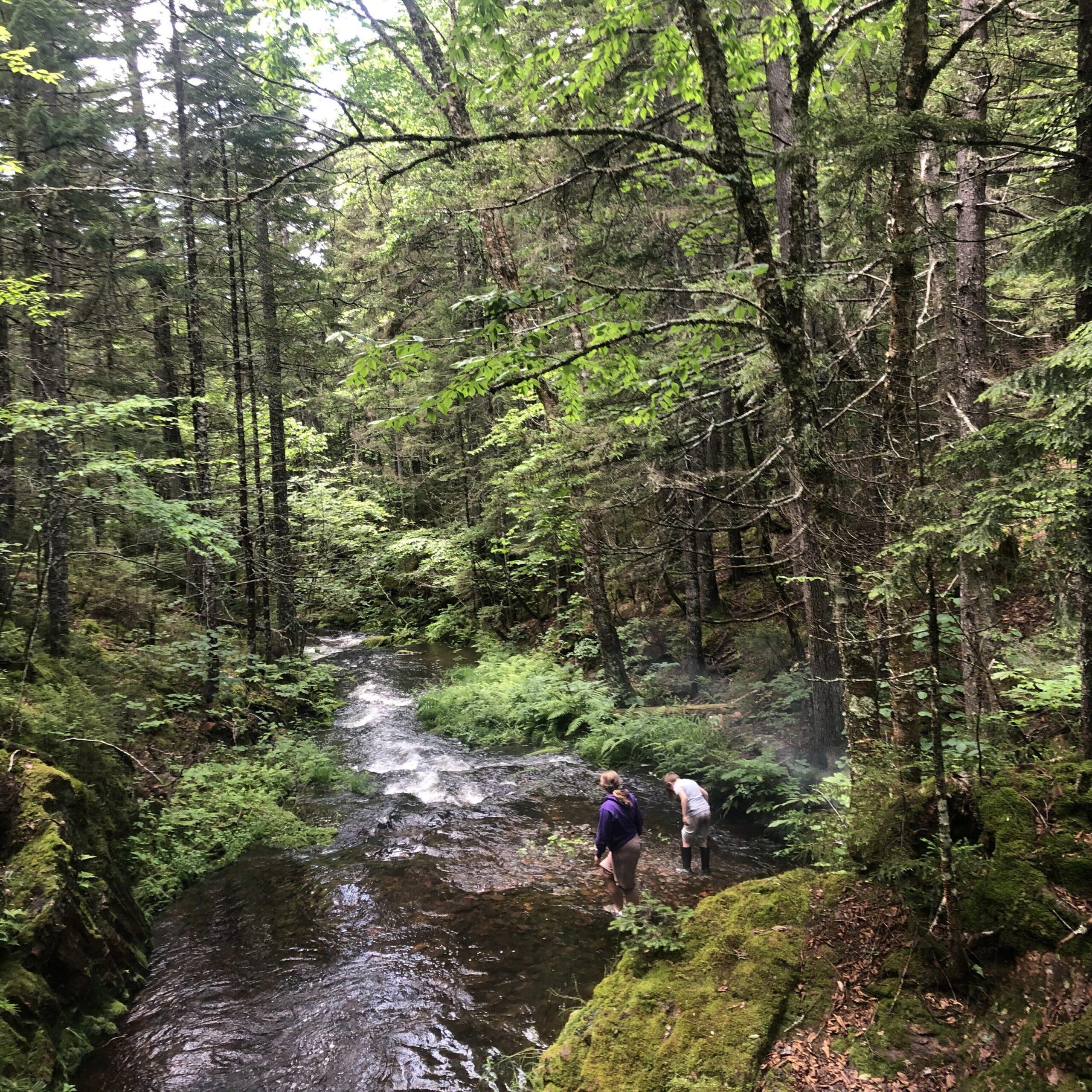
Stopping beside a brook so the kids could play in the water while we made lunch.
Dinner at our family’s wagyu farm.
Checking on our camp.
Digging up wild mugwort (Artemisia vulgaris) to transplant.
Picking fiddleheads for supper.
Making homemade ice cream with our grandson.
And somewhere inside all of that, I kept thinking about how strange modern life has become.
Because people spend enormous amounts of money trying to simulate the feeling we experience naturally there:
slowness, presence, darkness, quiet, community, useful work, shared meals, children outdoors, nervous systems settling back into rhythm.
Nothing about it feels luxurious in the modern sense.
And yet it feels deeply rich.
The land we live on is held collectively through a non-profit landshare stewarded by the people who live there. We help each other with land, tools, animals, rides, projects, children, emergencies, and life. There’s an interdependence there that most people quietly crave but rarely experience anymore.
And maybe my favourite part of all of it is this:
While we’re temporarily living in Halifax so I can finish my acupuncture studies, going home for the weekend feels exactly like people escaping to their dream cabin life.
Except we’re not visiting a fantasy we hope to someday retire to.
This is already our real life.
And in just three more months, we get to come home to it for good.